Due to reports and rumors that a higher ethanol blend may impact engine life, fuel efficiency, or maintenance costs, India's switch to E20 petrol has increased automobile owners' anxiety. The controversy has only gotten worse, and the faultlines have gotten sharper, despite the government and certain auto industry voices maintaining that the fuel is safe for the majority of vehicles on Indian roads. The public reaction over the E20 change shows no signs of abating.
As part of a bigger plan to lessen India's reliance on imported crude oil, enhance energy security, and expand the market for ethanol generated domestically, the countrywide implementation of E20 gasoline was finished in 2025.
What are E10 and E20 petrol?
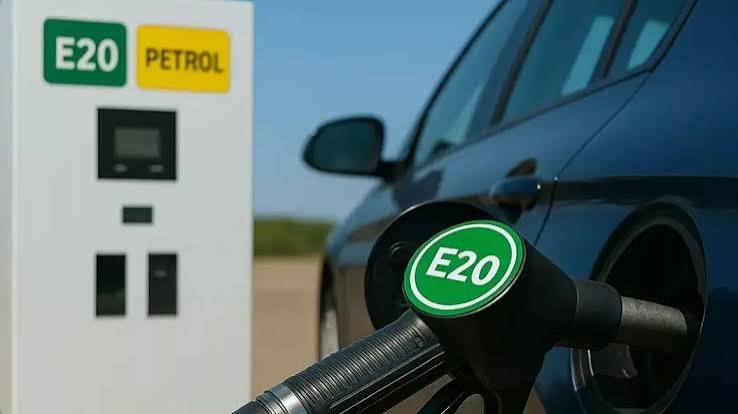
The concentration of ethanol is the main distinction. Up to 10% ethanol is mixed with gasoline in E10, and that percentage is doubled to 20% in E20. In India, sugarcane and grain feedstock are the main sources of ethanol, a renewable biofuel. The government hopes to reduce the use of fossil fuels while boosting the agricultural sector by raising blending levels.
However, the policy viewpoint is irrelevant for car owners, at least for now. They are mainly worried about compatibility-or lack thereof-and how the new gasoline will affect their car.
E10 vs. E20: Principal distinctions According to recent tests conducted by the Automotive Research Association of India (ARAI), the answer is not so much a yes-or-no question as it is dependent on the age and engine configuration of the vehicle. Bikes against cars: After thorough testing, ARAI's study identified no significant durability issues for two-wheelers running on E20 fuel. On the other hand, four-wheelers presented a more complex image.
Are older autos riskier? ARAI noted that after prolonged use, several rubber parts in the fuel system in older cars that were initially built for E10 fuel may age more quickly.
Simply said, after converting to E20, cars will experience engine failure right away. Rather, they highlight long-term wear that might become important in cars that were not designed for greater ethanol concentrations.