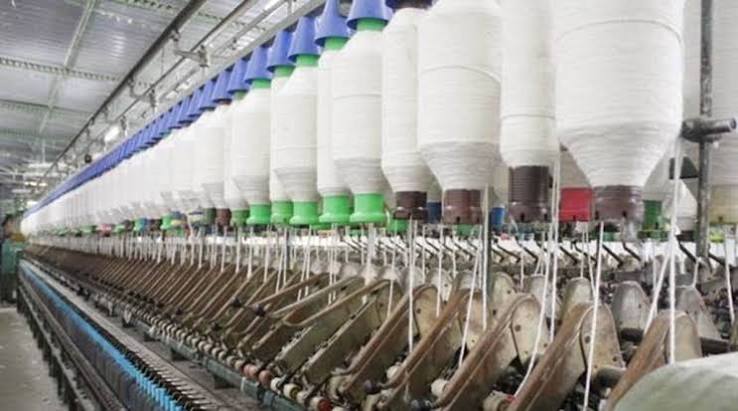
JAIPUR: Surat’s textile industry is currently facing pressure from rising production costs. Higher polyester yarn prices have made production more expensive for powerloom and weaving units. Several units have reduced working days, with some reportedly stopping production for two days a week.
According to industry representatives, around 1.5 lakh powerlooms are currently reducing production. The move is estimated to affect the income and work of around 40,000 to 50,000 workers. These figures are industry estimates and not official government data.
Polyester Yarn Prices Rise From ₹112 to ₹140 per Kg
The biggest concern for weavers is the sharp increase in yarn prices. According to people associated with the industry, polyester yarn, which was priced at around ₹112 per kg earlier, has now risen to nearly ₹140 per kg.
That represents an increase of around 25%. However, fabric prices have not increased at the same pace. This has put direct pressure on the margins of weaving units.
Production Costs Have Increased, But Fabric Prices Haven’t Kept Pace
According to weavers, the cost of grey fabric was earlier around ₹16 per metre. Based on the current yarn prices, the cost should have increased by around ₹5 per metre.
However, the market has accepted an increase of only around ₹1 to ₹1.50 per metre.
In simple terms, production costs are rising much faster than what customers are willing to pay. The difference is directly affecting the margins of weavers.
What Is Driving the Rise in Yarn Prices?
Polyester yarn prices are closely linked to the cost of petrochemical raw materials. Inputs such as PTA (Purified Terephthalic Acid) and MEG (Monoethylene Glycol) are used in polyester production. Their prices are influenced by international crude oil and petrochemical market conditions.
Industry representatives have also pointed to tensions in West Asia and volatility in energy markets as factors contributing to higher costs.
However, it would not be accurate to attribute the entire increase in yarn prices to crude oil or the Middle East tensions alone. Several factors, including PTA and MEG prices, energy costs and supply conditions, can influence the final price of polyester yarn.
Two-Day Weekly Shutdown, But It Is Not a Government Order
The decision by some Surat units to stop production for two days a week is not due to any government order. It is a voluntary production cut aimed at controlling costs.
According to industry representatives, some units have stopped production for two days a week, while others have reduced the number of shifts. The Federation of Gujarat Weavers Association (FOGWA) has also reportedly advised units to slow production for around a month.
The objective is to limit losses until a better balance is restored between yarn prices and fabric selling prices.
Pressure on Workers Is Increasing
Lower production is also affecting workers. Industry representatives estimate that the income or employment of around 40,000 to 50,000 workers could be affected.
However, it is important to clarify that this does not mean that jobs for 40,000 to 50,000 people have already been lost. The immediate concern is mainly fewer working days and lower income.
A large number of workers in the powerloom and weaving sector depend on daily or shift-based work. Therefore, a reduction in working days can directly affect their monthly earnings.
Why Is This a Concern for Surat’s Wider Textile Industry?
Surat’s textile ecosystem extends well beyond powerlooms. Weaving is connected to several other activities, including dyeing, processing, printing, embroidery and textile trading.
If weaving units continue to operate at lower capacity for an extended period, the impact could spread across these businesses as well. Lower production could reduce yarn demand, affect processing units and put pressure on transportation and labour income.
For now, however, it would be premature to describe the situation as a shutdown of Surat’s entire textile industry. The available reports point mainly to production cuts among certain clusters and units.
Textile Industry Seeks Government Relief
Weavers’ associations have sought government support to deal with rising yarn prices. The industry has also raised demands for measures that could reduce raw-material costs and provide relief through customs duties.
Weavers argue that if yarn prices remain elevated for a prolonged period, continuing production at current cost levels could become increasingly difficult.
Aurelius Business View
The situation in Surat cannot be explained simply by saying that “yarn has become expensive.” The bigger problem is the gap between input costs and selling prices.
Polyester yarn has risen from around ₹112 to ₹140 per kg, while the increase in grey fabric prices has reportedly been limited to around ₹1 to ₹1.50 per metre. This gap is putting pressure on weaving margins.
In this environment, stopping production for two days a week is essentially a defensive move. It can help units control costs and limit losses in the short term. But it is unlikely to be a sustainable solution if the cost pressure continues for a long period.
The market will now be watching three key factors: yarn prices, grey fabric selling prices and textile demand.
If yarn prices ease and festive-season demand improves, weaving units could gradually increase production again. But if raw-material prices remain high and fabric prices fail to improve sufficiently, margin pressure could intensify further.
One point remains particularly important: the figures of 1.5 lakh powerlooms and 40,000-50,000 workers are estimates provided by industry representatives. They should not be presented as official government data.
Disclaimer: This report is based on available media reports and statements from industry representatives. Production and employment figures cited in the report are industry estimates. This article is not investment advice.