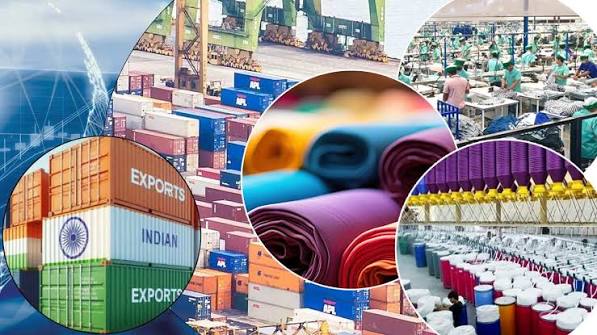
India's textile industry continues to flourish in the international market, supported by government policy, steady export growth, and wider trade opportunities. India's textile exports, including handicrafts, rose 2.1% on-year to 3.16 lakh crore in FY2025-26 despite the global economic headwinds, the Ministry of Textiles said. Man-made textiles and handicrafts also showed strong growth. Ready-made garments remained the most important export category.
The India-UK Comprehensive Economic and Trade Agreement (CETA), which is expected to come into effect from July 15, 2026, is also likely to give an extra push to the sector. The pact will provide duty-free access for almost 99 percent of Indian exports to the UK, giving a major boost to the competitiveness of Indian textile and apparel products in one of the country's major export markets. Industry insiders say the deal could help Indian exporters capture a larger slice of the United Kingdom market over the next few years.
Government initiatives such as the PM Mitra Mega Textile Parks, the production-linked incentive (PLI) scheme, and export support measures including RoSCTL and RoDTEP continue to encourage investment, modernize manufacturing, and improve global competitiveness. These initiatives are aimed at strengthening the entire textile value chain, from fiber production to value-added apparel exports.
But the industry still faces hurdles of volatile cotton prices, rising logistics costs, and unpredictable global demand. However, in the medium term, export market diversification, government policies, and trade access are expected to support sustainable growth of India's textile sector.