
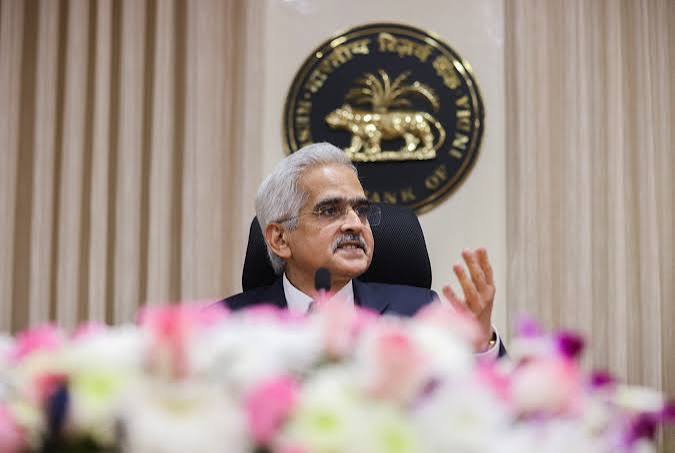
RBI Likely to Cap Rate Hikes at 25-50 bps, Says Nomura; Inflation to Ease in 2027
The Reserve Bank of India (RBI) may make only a limited interest rate hike in the current cycle. According to a report by global brokerage Nomura, the hike could be between 25 and 50 basis points (bps). The market is expecting far tighter policy than that. Note that this is Nomura's estimate, not an official RBI decision.
Nomura's Estimate: A Limited "Recalibration," Not a Long Tightening Cycle
Nomura's analysts have assigned an 80 per cent probability to a limited recalibration cycle, meaning not a broad tightening cycle involving hikes of more than 75 bps. According to the report, the market is pricing in about 125 bps of hikes over the next year, which Nomura calls excessive given the current inflation situation.
Nomura assesses that the RBI could raise rates by 25 bps each in October and December, taking the terminal rate (the level of the policy rate at the end of the cycle) to 5.75 per cent. The brokerage also sees some risk of just a single hike. The report adds that the probability of further hikes may diminish after February 2027, as consumption could slow down and the outlook for next year's inflation could improve.
In simple terms:
- Repo rate: The interest rate at which the RBI lends to banks. It plays an important role in setting the direction of banks' lending rates, such as home loans.
- Basis points (bps): A small unit for measuring interest rates. 100 bps = 1 per cent, so 25 bps = 0.25% and 50 bps = 0.50%.
The Inflation Picture: Core Inflation Has Fallen, Food Prices Are the Big Risk
According to Nomura, the current moderation in inflation is different from the 2016-17 period, because this time the fall is driven largely by lower core inflation. Core inflation has come down from around 5 per cent to about 3 per cent. The report says there are limited signs of generalisation of inflation, so a long tightening cycle is not expected. Nomura also said that a pre-emptive rate hike could be appropriate to keep inflation expectations anchored.
In the near term, food prices remain the main risk to inflation, although government supply-side measures could help contain some of the pressure. According to the report, adverse base effects could add about 0.8 per cent to headline inflation in October-November.
In simple terms:
- Headline inflation: Overall inflation, which includes volatile items such as food and fuel.
- Core inflation: Inflation excluding food and fuel, which better reflects the lasting trend in prices.
Nomura's Inflation Forecasts for 2027
According to Nomura:
- Headline CPI inflation could be around 5.3 per cent in the first half of 2027.
- In the second half of 2027, it could fall below 4 per cent.
- CPI inflation is expected to be 5.2 per cent in FY27 and 4 per cent in FY28.
- Core CPI inflation could be 4.3 per cent in FY27 and 4 per cent in FY28.
Possible Impact on Ordinary People, Home Loans, Business and the Stock Market
The impacts below are based on general economic understanding, not claims made in Nomura's report. If rates rise, interest rates on home loans and other loans could go up, which may increase the EMI for floating rate borrowers or lengthen the loan tenure. As borrowing becomes costlier, businesses' borrowing costs may rise, which could be a challenge especially for small and debt-dependent businesses. In the stock market, attention may stay on interest-sensitive sectors such as banking, real estate and auto. Savers may benefit from better deposit rates. If the tightening turns out smaller than the market expects, it could be a relief for investor sentiment. The final impact will depend on the RBI's actual decisions and upcoming inflation data.
Conclusion
According to Nomura, the RBI's interest rate hikes may remain limited, while the market is pricing in relatively aggressive tightening. This is entirely the brokerage's assessment. The RBI's official decision will be made only at upcoming monetary policy meetings, so readers should keep an eye on the RBI's announcements.
Source: Nomura report, via IANS