
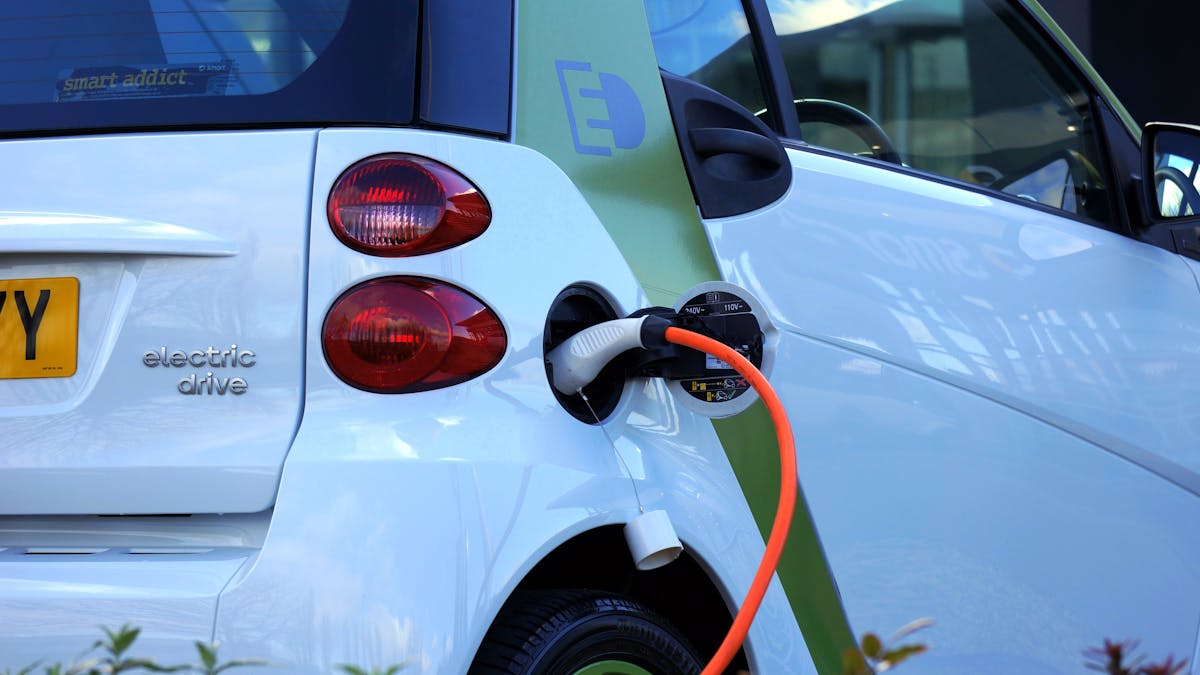
The Ministry of Heavy Industries released India's revised Electric Vehicle Policy 2026, targeting 5 crore electric vehicles across all categories on Indian roads by 2030 — a target that represents 17-18% of the total projected vehicle fleet and would require EV sales of approximately 80 lakh units annually by FY30, up from approximately 24 lakh in FY26. The policy blueprint combines demand-side incentives through the FAME III scheme (with Rs 25,000 crore of government support over three years), supply-side manufacturing push through PLI for EV batteries and components, and infrastructure development through the PM e-Drive charging infrastructure mission that targets 50,000 public fast-charging stations and 5 lakh AC slow-chargers by 2028.
The FAME III scheme, announced in Budget 2026 with significantly expanded scope compared to FAME II, provides direct purchase subsidies of Rs 10,000 per kWh of battery capacity for two-wheelers (capped at Rs 20,000 per vehicle) and Rs 8,000 per kWh for electric three-wheelers. For passenger cars, the subsidy structure has been redesigned to favour smaller and more affordable vehicles — providing Rs 40,000-80,000 subsidy for EVs priced below Rs 12 lakh (the mass-market segment) while providing no subsidy for vehicles above Rs 15 lakh, explicitly targeting the middle class rather than subsidising premium EV purchases by affluent buyers. The commercial EV subsidy covers electric buses, trucks and auto-rickshaws with varying subsidy levels based on battery capacity and vehicle type.
The PM e-Drive charging infrastructure mission is addressing the critical bottleneck of public charging availability that has constrained EV adoption particularly in non-metro markets. The 50,000 fast-charging station target — covering all national highways at 60 km intervals, district headquarters towns, major shopping malls, commercial parking facilities and railway stations — will be executed through a viability gap funding mechanism where the government provides 40% capital subsidy and DISCOMS (distribution companies) are mandated to provide dedicated EV charging feeders with reliability standards. The mission also includes a significant focus on residential charging infrastructure — funding the installation of smart EV charging points in existing and new multi-unit residential buildings through condominium association grants.
Battery manufacturing, the single most important lever for EV cost reduction and supply chain sovereignty, is receiving the most substantial policy attention. The PLI scheme for Advanced Chemistry Cell batteries has attracted investments of Rs 28,000 crore against the government's Rs 18,100 crore outlay, with Ola Electric Cells, Reliance New Energy, India Energy Storage Alliance-affiliated projects and Exide Energy among the approved beneficiaries setting up domestic lithium-ion cell manufacturing capacity. The target is 50 GWh of domestic battery cell manufacturing capacity by 2030, which would substantially reduce India's dependence on Chinese cell imports that currently account for over 80% of Indian EV battery content. Domestic cell manufacturing at scale is essential for India's EV ambitions to be economically and strategically sustainable.
The automotive industry and EV startups have broadly welcomed the revised policy while flagging several implementation challenges. The charging infrastructure gap, particularly in tier-2 and tier-3 cities and in states like Uttar Pradesh, Bihar, Madhya Pradesh and Jharkhand where EV awareness and adoption are still nascent, requires significant state government cooperation alongside central policy. The skilled manpower challenge in EV service — including battery technicians, high-voltage electrical systems mechanics and EV software diagnostics specialists — is an area where training programmes are significantly behind the pace of vehicle deployment, risking poor after-sales experiences that could create backlash among early adopters in new markets. The government is addressing the training gap through an expansion of ITI EV technician courses in partnership with ASDC (Automotive Skills Development Council) and has announced scholarships for youth from EV manufacturing clusters to upskill in battery technology and power electronics.


