Krutrim, the artificial intelligence startup founded by Bhavish Aggarwal (also CEO of Ola Electric) with an ambitious vision to build India's own large language model and AI infrastructure, launched Krutrim Pro — India's first genuinely multilingual generative AI model supporting all 22 constitutionally scheduled Indian languages including Hindi, Bengali, Telugu, Marathi, Tamil, Urdu, Gujarati, Kannada, Odia, Malayalam, Punjabi, Assamese, Maithili, Santali, Kashmiri, Nepali, Sindhi, Konkani, Dogri, Manipuri, Bodo and Sanskrit — alongside English. The launch positions Krutrim directly against Google's Gemini, OpenAI's ChatGPT and Meta's Llama in the Indian market, with the unique differentiator of deep Indian language support that global models handle inconsistently and Sarvam AI (the other India-focused AI lab) addresses only partially.
Krutrim Pro's development leveraged a proprietary training dataset of 2 trillion tokens with a specifically curated Indian language corpus — including regional news archives, literary works, government documents, educational content and social media text in each of the 22 languages — that gave the model superior Indian cultural context and linguistic nuance compared to global models trained predominantly on English-language web content with Indian language representation as an afterthought. The model achieves native speaker quality output in Hindi, Tamil, Telugu and Bengali — the most widely spoken Indian languages — with benchmarks showing 40-60% better performance on Indian language understanding tasks compared to GPT-4o and Gemini 1.5 Pro in controlled evaluations by independent researchers at IIT Bombay and IIIT Hyderabad.
The commercial opportunity Krutrim is targeting goes beyond being another chatbot. The vision is to build AI infrastructure for Indian enterprises and government agencies that need multilingual AI capabilities for customer service, document processing, content creation and knowledge management across their operations in non-English speaking regions. The Indian government itself is a potentially massive customer — with over 1 crore government employees, thousands of government websites and millions of citizens interacting with government services predominantly in regional languages, there is enormous demand for AI that can translate, summarise, generate and respond in 22 languages with the cultural accuracy that only an India-focused model can provide. Krutrim has been in discussions with several ministries including Railways, Agriculture, Health and Education for pilot deployments of its multilingual AI capabilities.
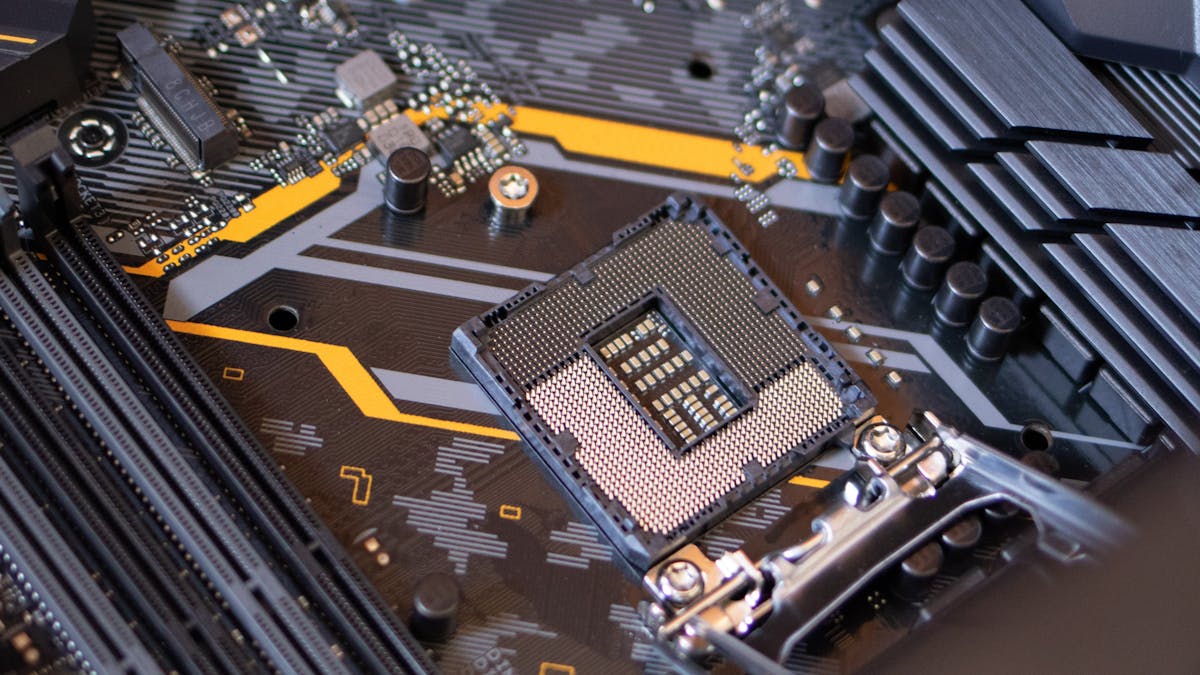
The AI chip development ambition is Krutrim's most ambitious and controversial aspect. Aggarwal has announced plans to develop indigenous AI inference chips that would reduce India's dependence on NVIDIA's H100 and H200 GPUs that currently dominate AI compute globally. The chip development effort — led by a team of semiconductor engineers recruited from Qualcomm, NVIDIA, Intel and AMD — is building on India's existing chip design expertise while targeting a differentiated architecture optimised for inference (running trained models) rather than training, where the compute requirements are lower and the performance-per-watt advantage of custom silicon over general-purpose GPUs is more achievable. The chip timeline and commercial viability remain uncertain, with critics noting that designing AI accelerator chips that compete with NVIDIA's capabilities requires multi-year development cycles and billions in R&D investment that Krutrim has not yet secured.
The broader debate around India's AI sovereignty — whether India needs its own foundation models and AI infrastructure or whether building applications on top of global models is the right approach — has intensified with Krutrim's launch. Proponents of Indian AI models argue that controlling the training data, model weights and inference infrastructure is essential for data sovereignty, that Indian languages are systematically underserved by global models whose commercial incentives prioritise English, and that building indigenous AI capability is a strategic necessity for national security applications. Skeptics counter that the resource requirements for developing and maintaining frontier AI models are enormous and that India would achieve better outcomes by focusing its AI investment on applications and domain-specific fine-tuned models built on global foundation models rather than competing head-to-head in the expensive foundation model race where American and Chinese companies have a 2-3 year head start and billions in additional capital. Krutrim's success or failure over the next 2-3 years will provide an important empirical data point in this ongoing debate about the right AI development strategy for a technologically ambitious but resource-constrained nation.