Brokerage Target Price Meaning In Plain English
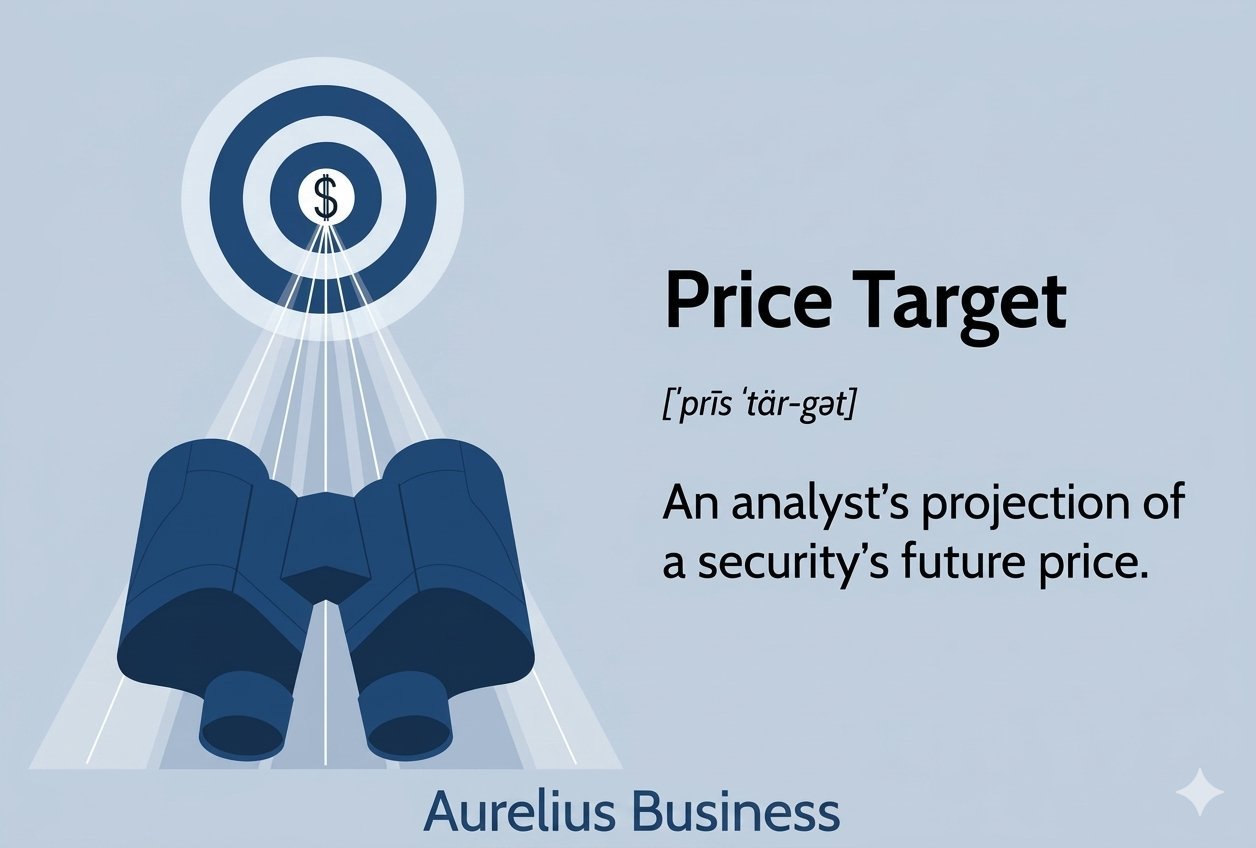
Strip away the jargon and a brokerage target price is just an analyst’s estimate of what a stock could be worth after 12–18 months, based on their earnings model and valuation method.
Most houses publish two pieces together: a number and a label. Understanding the buy hold sell rating meaning matters more than getting excited by a high target.
-
Buy: Analyst expects meaningful upside from the current price over the next year or so.
-
Hold: Limited upside; risk and reward look balanced at current levels.
-
Sell: Stock looks overvalued or earnings risk is rising relative to the price.
Behind that, the analyst is usually applying a PE, EV/EBITDA, or discounted cash flow model. None of those is magic. They’re just organised ways to say, “If these assumptions are right, this is roughly where it lands.”
How To Read Analyst Target Price Without Getting Swayed
If you only remember one thing, make it this: the target is a scenario, not a promise. The more moving parts in the story, the more fragile that number.
Before you act on any stock target price today, run it through a quick checklist that forces you to question the story, not worship the spreadsheet.
Look Under The Hood Of The Assumptions
Start by checking earnings growth, margins and interest rate assumptions. A target that needs 25% earnings growth for five years is far more fragile than one baking in 10%. The brokerage report will usually spell this out in the small-print tables.
Analysts also make quiet calls on corporate governance, capital allocation and promoter behaviour. Those don’t show up as a neat number but often matter more than the last decimal of the target.
Use Upside To Target Price As A Sanity Check
Almost every note highlights the upside to target price as a percentage. Treat this as a rough risk–reward indicator, not a green light: 10–15% upside with high risk may be less attractive than 8–10% upside on a steady compounder.
A simple thumb rule: if the supposed upside is less than your reasonable long-term return expectation from equities, you’re basically taking stock-specific risk for index-like returns.
What Buy, Hold And Sell Calls Really Signal
Investors obsess over the label and forget the context. A “Hold” after a long rally can actually be a quiet warning, while a “Buy” after a crash might still be conservative.
To really understand buy hold sell rating meaning, you have to see where the stock is in its cycle and how consensus positioning looks across houses.
Why So Few Explicit Sell Calls
On paper, if an analyst thinks a stock is 20% overvalued, the textbook answer is to slap a Sell on it. In practice, many brokerages hesitate because companies are also clients.
This is why so many brokerage recommendations today cluster around “Accumulate”, “Add” or “Reduce” rather than blunt Sell. Read those as softer versions of the same message.
Reading The Language, Not Just The Label
Over time you’ll notice patterns. When the call is “Buy” but the report is full of phrases like “execution risk”, “valuation rich” and “limited margin of safety”, treat it as far less bullish than the label suggests.
The research we see quoted by Aurelius Business often shows that the tone of the text is a better guide than the headline rating, especially near market extremes.
How To Use Target Prices In Your Own Process
The point isn’t to ignore broker research. It’s to decide where it sits in your decision tree. For most individual investors in India, brokerage targets should come in after basic filters like balance sheet strength and promoter track record.
If you already follow a structured stock-picking framework, use target prices as a cross-check, not the starting point.
-
Start With Business Quality: Moat, industry structure, customer stickiness and regulatory risk.
-
Then Check Financial Health: Debt levels, cash flows and capital allocation track record.
-
Only Then Look At Targets: See how your internal fair value compares with the analyst’s number.
-
Track Revisions: Repeated downward earnings cuts usually matter more than one-time rating labels.
If you want to go deeper into building a valuation lens, follow long-form equity research styles similar to what serious analysts use instead of chasing every stock target price today.
Is Target Price Accurate Or Just A Guess?
Investors often ask is target price accurate in any meaningful way. The honest answer: sometimes, but not in the precise way the number pretends.
Think of targets as a range wrapped in a single point. Markets move, new information arrives, and sentiment shifts. All of that can break a neat 12-month forecast in a week.
Where Targets Fail Most Often
Targets tend to miss badly in two zones: deep cyclicals and frothy story stocks. In both, small assumption changes blow up the model. The history of Indian mid-cap manias is full of examples where models adjusted too slowly.
Targets also age quickly. A “fresh” report from two months ago may already be stale if a new regulation or quarterly result has changed the earnings picture.
Simple Ways To Judge Analyst Track Record
You don’t need complex data to judge how to read analyst target price quality over time. Just track, for a few names you follow, how often targets move sharply and in which direction.
Analysts who constantly raise and then cut numbers after results are signalling that they’re chasing price rather than leading it with conviction.
Common Mistakes Indians Make With Brokerage Calls
Patterns repeat across clients. Once you’ve seen a few cycles, you can almost predict which new investor will get trapped by a nice-looking PDF report.
Using what we see across Indian retail flows and the kind of questions that reach Aurelius Business, a few recurring mistakes stand out.
-
Confusing Consensus For Safety: Five Buy calls don’t protect you from a bad business model.
-
Ignoring Position Sizing: Even a great idea hurts if you bet too much of your portfolio.
-
Chasing Every New Report: Constantly rotating into the latest high-upside idea kills compounding.
-
Forgetting Fees And Taxes: Frequent trading to follow calls quietly eats into your real return.
If you instead treat brokerage recommendations today as inputs to refine your watchlist, you’ll trade less, think more and sleep better during corrections.
Conclusion
Brokerage reports can save you hours of legwork, but the brokerage target price meaning is often oversold as certainty. Treat the number as a scenario, test the assumptions, and anchor on your own view of business quality and fair value.
Used that way, they become one useful data point rather than a command. Build your own filters, learn from past cycles, and use platforms like Aurelius Business to strengthen your judgement before letting any single target influence real money decisions.
Frequently Asked Questions
Q1. What Is The Usual Brokerage Target Price Meaning For Retail Investors?
Ans: For retail investors, brokerage target price meaning is simply the analyst’s best guess of fair value 12–18 months ahead. It isn’t a guarantee, just a scenario built on assumptions about earnings, valuation and risk, which you should always cross-check yourself.
Q2. How Often Do Brokerages Change Their Target Prices?
Ans: Brokerages typically change targets after quarterly results, major news, or sectorwide events. In volatile phases this can be every few weeks. Frequent sharp revisions are a sign their conviction is low or they’re reacting to price moves instead of anticipating them.
Q3. Should I Buy A Stock Only Because It Has A Buy Rating?
Ans: No, a Buy rating is not a standalone reason to invest. Treat it as one opinion. First check the company’s business quality, financial health, valuation versus peers and your own asset allocation, then decide if the risk suits your time horizon.
Q4. How Do I Read Upside To Target Price Numbers Sensibly?
Ans: Start by asking what return you reasonably expect from equities. If the upside to target price is barely above that, there’s no real edge versus a simple index fund. High upside with very optimistic assumptions can also be riskier than it appears.
Q5. Can Target Prices Help With Short-Term Trading?
Ans: Target prices are generally framed for 12–18 months, so they’re a blunt tool for short-term trades. Day and swing traders tend to focus more on price action, liquidity, support and resistance zones than on one-year fundamental targets.