
Moneyview initial public offering Listing: Shares Jump 70%, What Investors Made and What Comes Next
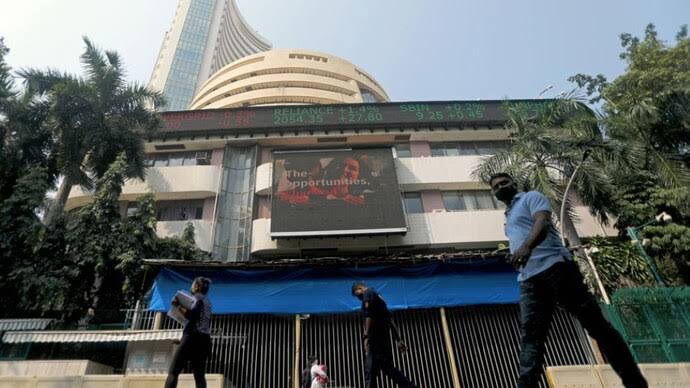
Digital lending platform Moneyview made a strong entry in the stock market on October 1. The shares listed at ₹55 on NSE and ₹55.61 on BSE, which is 61.76% and 63.56% above the issue price of ₹34 respectively. The grey market was quoting a premium of ₹14-14.5, which implied a gain of around 41-43%, but the actual listing came in higher than that.
Today's Price
Buying continued after listing. At around 11:53 AM, the shares were trading at ₹57.86 (+70.18%) on NSE and ₹57.85 on BSE.
Listing Gain: How Much Did Investors Make Per Lot?
One lot was 441 shares, costing ₹14,994 at the upper band. At the NSE listing price, the investment became ₹24,255, a gain of ₹9,261 per lot.
Subscription: The Real Reason Behind the Confidence
The IPO was subscribed 98.46 times, and the QIB portion was subscribed 227.45 times. According to BSE data, the company received bids worth ₹77,850 crore from 48.55 lakh applications. The QIB share of the issue was 50%, NII 15% and retail 35%.
Market Cap: From ₹6,000 Crore to Above ₹10,000 Crore
At the upper band, the company was valued at about ₹6,000 crore, well below its valuation of over $1 billion when it became a unicorn in 2024. At the ₹55 listing price, the market cap was around ₹9,681 crore. (Source: Inc42, INDmoney) At ₹57.86, this works out to around ₹10,185 crore (our calculation, based on the ₹5,985 crore IPO figure).
Valuation: How Expensive Is It Now?
According to INDmoney's analysis, the P/E was 24.76x and P/B 2.16x at the IPO price, which rose to a P/E of 40.05x and P/B of 3.50x at ₹55. By its numbers, both multiples are still below the peer average. On the RHP's FY26 diluted EPS of ₹1.57, the P/E at ₹57.86 comes to about 36.9x (our calculation). The figures change with the EPS basis used. On annualised June-quarter earnings the P/E looks much lower, but one quarter is not a reliable measure of a full year.
Shareholding Pattern
Before the IPO, the promoters and promoter group held 23.96%. After the issue, this was expected to fall to 20.33%, while JM Financial puts it at 19.31%. The final picture will become clear from the shareholding pattern filed with the exchanges after listing.
Accel's two entities together hold about 21.9%: Accel India IV holds 14.7% and Accel Growth IV holds 7.19%. At the time of the DRHP, Tiger Global's Internet Fund III held 13.79%, Ribbit Capital 10.2% and Apis Growth about 6.6%. These figures are from before the IPO, and several large investors sold part of their stake in the OFS.
Financial Health
In FY26, total income grew 43% to ₹3,404.27 crore, but profit stayed flat. PAT was ₹242.71 crore (FY25: ₹240.28 crore). This includes an exceptional loss of about ₹34.91 crore from a cybersecurity incident.
In the June 2026 quarter, profit rose 159% to ₹173.8 crore and revenue was ₹1,041.1 crore. AUM has crossed ₹22,520 crore. RoNW was 10.65% in FY24, 12.52% in FY25 and 17.85% in FY26. Value Research shows FY26 ROE at 10.91%, so the figures differ depending on the definition used.
Use of IPO Proceeds
Of the ₹750 crore fresh issue, ₹325 crore will go into lending operations and ₹250 crore will strengthen the capital of its NBFC subsidiary, Whizdm Finance.
Business Strengths
The company has 14.03 crore registered users, of whom 1.19 crore are monetised. In FY26, it held a 10.5% share of digital unsecured personal loan sanctions. Dependence on the top 10 financial partners has fallen from 56.78% in FY24 to 37.36% in FY26.
Long-Term Risks to Watch
- The company works on the DLG (default loss guarantee) model, which means it bears part of the credit losses.
- By one calculation, Debt/Equity rose from 1.06 in FY24 to 2.32 in FY26. Operating cash flow was negative in all three years.
- Regulatory tightening on unsecured loans can directly hit profits.
- With the stock 70% above the issue price after listing, valuation is now much more expensive than at the IPO.
At the IPO stage, IPO Watch described it as an issue suited to a long-term view. After listing, INDmoney said that in the short term the price could be influenced by profit-booking and market sentiment.
What Will Matter Next?
In the coming quarters, it will be important to see whether profit holds at June-quarter levels, how credit losses behave, and how much large investors' holdings have changed in the post-listing shareholding pattern.
Sources: Groww,JM Financial, Angel One Value Research
Disclaimer: This article is for information only and is not investment advice. Investment in the securities market is subject to market risks. Consult your financial advisor before investing.