Gold Slips Below ₹1.40 Lakh, Silver Crashes 3.65%: Why Did Prices Suddenly Fall Before Dhanteras?
When it's festive season and gold and silver prices suddenly drop, the market is bound to take notice. On 30 October 2026, precious metals saw exactly such a sharp fall. Selling pressure was clearly visible in both gold and silver on MCX, while in the international market too, spot gold slipped below a key psychological level.
Today's Prices at a Glance
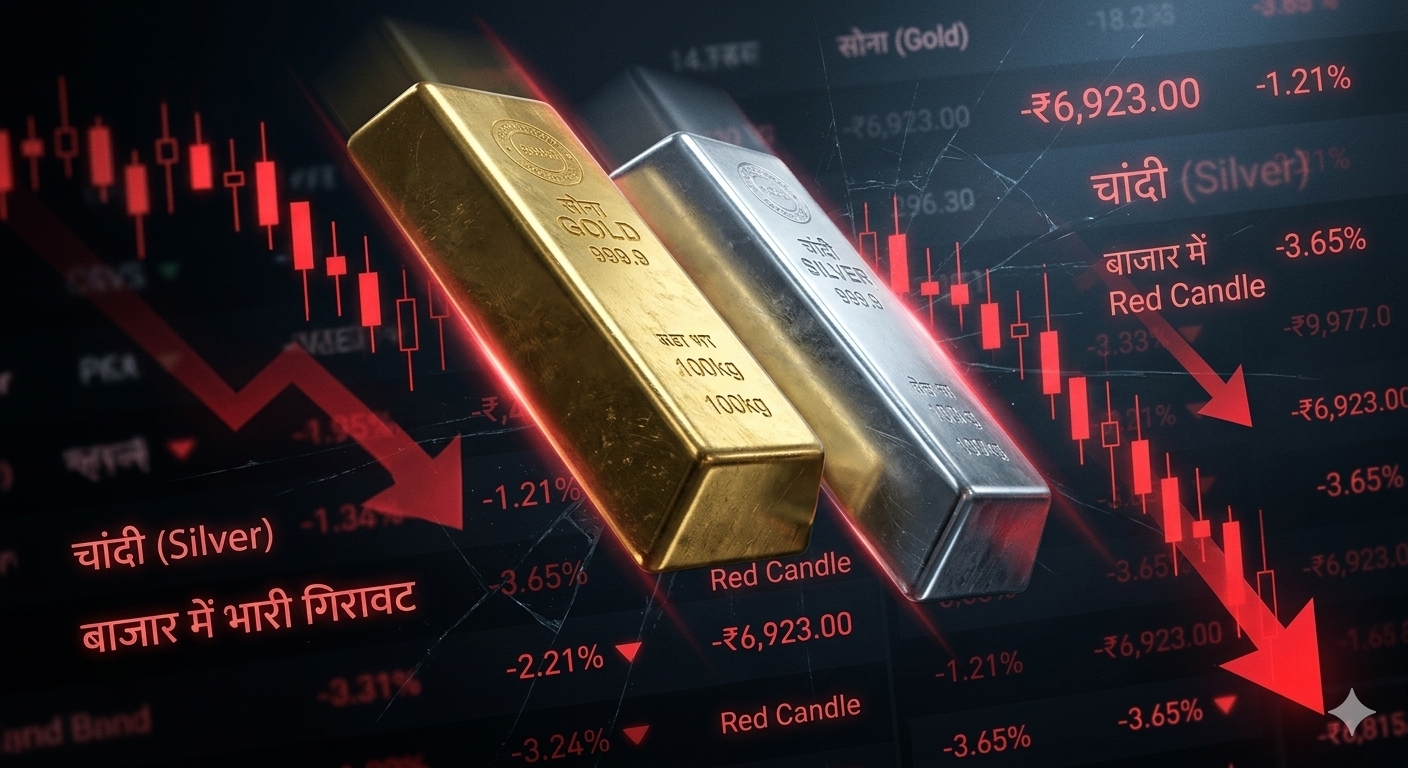
On MCX, gold was trading around ₹1,40,869 per 10 grams, down about 1.21%. That means a drop of roughly ₹1,727 in a single day. Silver's move was even weaker. It fell 3.65% to ₹1,82,530 per kg, a decline of about ₹6,923.
| Metal | Current Price | Today's Fall |
|---|---|---|
| Gold | ₹1,40,869 | -₹1,727 (-1.21%) |
| Silver | ₹1,82,530 | -₹6,923 (-3.65%) |
Note that silver's fall was about three times larger than gold's. Silver also has an industrial demand angle, which is why its price swings are usually sharper than gold's.
Reason 1: The US Federal Reserve's Tough Stance
The biggest reason for the fall has come from the United States. According to the report published on GoodReturns and market signals, the US Federal Reserve has adopted a policy of keeping interest rates high for a longer period. On top of that, given strong growth in the US economy and PCE inflation data, the chances of another rate hike in December 2026 are seen as stronger.
This has a direct link to gold. Gold pays no interest or dividend. When options like bank deposits and bonds start offering higher returns, holding gold becomes comparatively less attractive for investors. The result is that demand falls and prices come under pressure.
Reason 2: A Strong Dollar and Rising Bond Yields
Strong economic data from the US pushed up both the US Dollar Index and US government bond yields. Gold is priced in dollars, so when the dollar strengthens, gold becomes more expensive for buyers earning in other currencies. This weakens global demand.
Rising bond yields have the same effect. Higher yields mean investors see better earnings in safe government bonds, so they pull money out of gold and put it there. This is why strength in the dollar and yields often turns out to be bad news for gold.
Reason 3: Profit Booking at High Prices
Just before Dhanteras and Diwali, gold and silver prices were hovering near their record highs. When prices are at such elevated levels, global markets are volatile and interest rates are expected to rise, big investors and traders tend to prefer cashing out their gains. This profit booking suddenly increased selling pressure and deepened the fall.
The International Market
According to a Yahoo Finance report, spot gold today slipped below the key psychological level of $4,000 per ounce. The report's headline also mentions Middle East concerns, which means geopolitical conditions are weighing on market sentiment too. Business Today's commodity coverage also pointed to silver falling around 2% and gold coming under pressure.
Psychological levels matter because the market's eyes stay fixed on such round numbers. When they break, technical selling can sometimes intensify, although the path ahead will depend on several factors.
What This Means for Festive Buyers
After prices reached near-record levels, this decline is good news for families planning to buy jewellery or coins on Dhanteras and Diwali. GoodReturns reports mention big cuts in 22-carat and 24-carat gold prices across cities, which appears to be benefiting retail buyers.
Still, a few things are worth keeping in mind:
- Actual retail prices differ by city, making charges and GST, so always ask your jeweller for the latest rate before buying.
- Buy only hallmarked gold.
- Don't make your entire purchase based on one day's fall. Prices keep moving up and down even within the day.
What Investors and Traders Should Watch
The future direction of gold and silver will mainly depend on these factors:
- US Fed policy: How strong the chances of a December rate hike become.
- Dollar Index and bond yields: Whether the strength continues or eases.
- Global volatility: Geopolitical factors such as Middle East concerns.
- Domestic demand: How much festive buying supports prices.
Conclusion
The 1.21% fall in gold and 3.65% fall in silver on 30 October show that the precious metals market is driven not just by festive demand but also by global interest rates, the dollar and investor strategy. The US Fed's tough policy, a strong dollar and bond yields, and profit booking at record levels together created this pressure. This is a relief opportunity for buyers, but make any investment decision based on your own needs and risk appetite.
Sources: IBJA Bullion Daily Report , MCX live.
Disclaimer: This article is for information purposes only. It should not be treated as investment advice. Please consult your financial advisor before investing.