JAIPUR: There was some movement on the Hindustan Zinc counter on Wednesday. The reason: a major transportation deal with MFL India that caught investors' attention. The stock climbed 1.85 points, or 0.31%, from its previous close of Rs. 606.00 to reach Rs. 607.85. Not a big rally by any stretch, but the market didn't exactly shrug this one off either.
The stock opened the day at Rs. 609.00. During trade, it touched a high of Rs. 610.95 and slipped as low as Rs. 605.00. In all, around 74,840 shares changed hands — not a huge volume, but not a weak one either. Part of the BSE's Group 'A' category, with a face value of Rs. 2, this stock has seen its share of swings over the past year. It touched a 52-week high of Rs. 732.60 on January 28, 2026, and had slid all the way down to Rs. 430.60 on September 10, 2025 — a range of roughly 70% over twelve months. Looking at just the last week, the stock has moved between Rs. 587.60 and Rs. 610.95, suggesting it's found a bit more footing lately.
The company's market cap currently stands at around Rs. 2,56,667 crore — a single number that says a lot about just how big a player Hindustan Zinc is in India's mining and metals space. The shareholding pattern has also stayed fairly steady: promoters hold 60.71%, institutions hold 35.07%, and the remaining 4.22% sits with smaller, non-institutional investors. In other words, promoters still have a firm grip on the company, and institutional confidence hasn't wavered much either.
The Real Story: 30 Electric Trucks Are About to Hit the Road
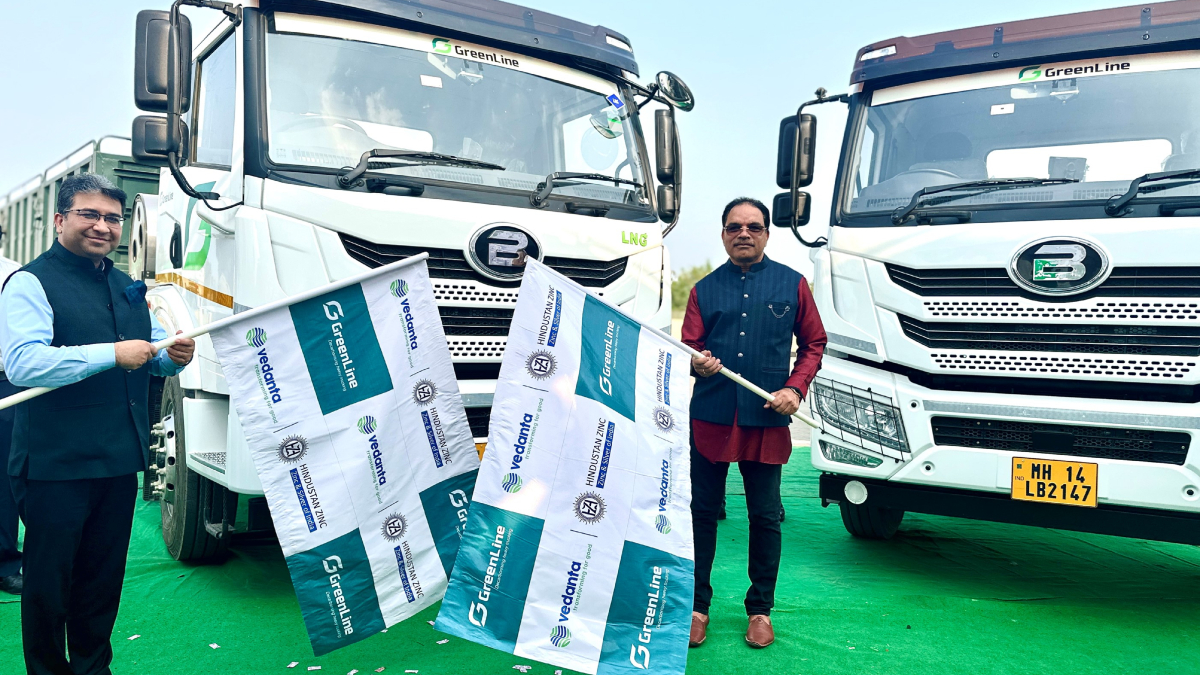
Now, to the deal that actually got this whole thing moving. Hindustan Zinc has signed a six-year contract with MFL India to deploy 30 electric trucks — for one specific job: moving concentrate from one point to another. And if things go well, the contract can be extended by another two years.
This isn't just any route. We're talking about the stretch from Rampura Agucha — described as the world's largest underground zinc mine — to the company's smelting operations in Rajasthan. Until now, this job has run entirely on diesel trucks, but electric vehicles will gradually take their place. This is part of the logistics chain the company simply cannot afford to let falter — any disruption here means concentrate doesn't reach the smelter, and that has a direct knock-on effect on production.
Sending in the trucks alone isn't enough — charging infrastructure matters just as much. That's why the deal also spells out that MFL will build and operate dedicated EV charging infrastructure along the entire route. Honestly, this is the piece that trips up most fleet-electrification plans — the trucks show up, but there's nowhere reliable to charge them. Here, the company appears to have plugged that gap before it even became a problem.
Hindustan Zinc has also been upfront about the fact that newer technologies like EVs and LNG come with significantly higher upfront costs than diesel. So this won't be an overnight switch — it'll happen in phases. As the electric fleet and its charging network get built out, diesel trucks will be phased out accordingly. One more thing worth noting: the company has said local drivers won't be pushed out of the network during this transition. So while the technology is changing, there's an effort to keep the people whose livelihoods depend on this work in the picture.
Why This Deal Actually Matters
For a company the size of Hindustan Zinc, logistics isn't some side business — it's the backbone of the entire operation. How quickly and cheaply ore travels from the ground to the smelter has a lot to do with how competitively the company can price its final metal. And let's be honest — for years, diesel truck convoys running through regions like Rajasthan have added meaningfully to the company's carbon footprint. So this move, even at a gradual pace, shows the company isn't just upgrading mining or smelting technology — it's paying attention to a part of the business that usually stays out of the spotlight.
And this isn't just Hindustan Zinc's story either. Across India's metals and mining sector, there's growing pressure — from regulators, investors, and global buyers alike — to show a credible decarbonisation roadmap that covers the entire value chain, not just production, but transportation and logistics too.
Aurelius Business View
If you just look at the stock movement, a 0.31% bump doesn't seem like much. And that's probably the right read — the market seems to be treating this as a positive development, not a game-changer. A six-year contract for 30 trucks isn't going to move the earnings needle overnight. But this shouldn't be judged purely on numbers — what matters more here is the company's intent and direction.
Companies that get ahead of electrification in heavy logistics — especially in a sector like mining, where diesel dependency still runs deep — tend to come out ahead once environmental regulations and carbon-linked trade restrictions tighten in the coming years. Hindustan Zinc's phased approach — not flipping the switch all at once — also says something about capital discipline. It keeps the balance sheet from taking a big hit in one go, while still letting the company build the operational experience it'll need to scale this up later.
Perhaps the smartest part of this deal is bundling in the charging infrastructure. A lot of companies buy the EVs first and figure out charging later — and that's usually where these plans stall on paper. By handing MFL the charging setup responsibility upfront, the company seems to have avoided the single biggest mistake that sinks most industrial EV projects.
For long-term investors, the real question isn't how much this one contract will add to the bottom line. It's whether Hindustan Zinc keeps making similar moves across its broader operations — mining equipment, smelting energy sources, whatever comes next. If it does, this deal won't just be a one-off headline — it could turn out to be the start of a much bigger picture.