
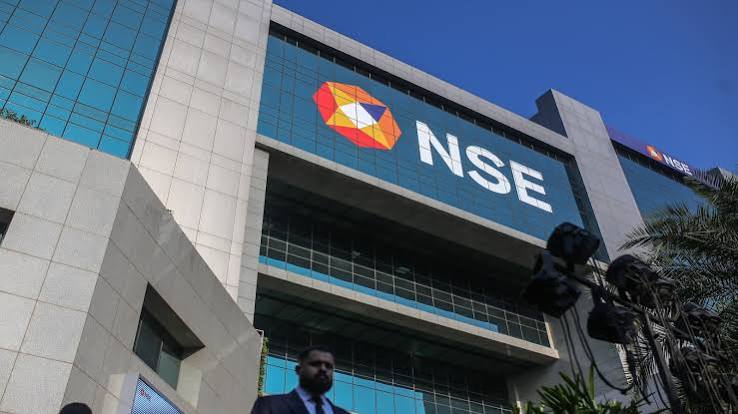
JAIPUR: Indian equities came under renewed pressure on Tuesday as Brent crude climbed above $91 a barrel after a temporary US-Iran ceasefire expired, reviving concerns over energy supplies and adding another layer of uncertainty for an already cautious market.
The Nifty 50 fell 0.27% to 24,219.80, while the Sensex declined 0.40% to 77,418.06 in early trade. Nine of 16 major sectoral indexes were trading lower, with information technology stocks among the biggest losers. The IT index dropped about 1.4%, while the mid-cap index slipped 0.5%.
The decline came after the Nifty had already lost ground for five consecutive sessions, leaving investors increasingly focused on global risks rather than domestic earnings triggers.
Oil crosses $91 as ceasefire hopes fade
The immediate trigger for Tuesday's weakness was the sharp rise in crude oil.
Brent crude futures moved above $91 a barrel, while West Texas Intermediate crude also climbed. The rise followed the expiry of the temporary US-Iran ceasefire and a deterioration in expectations of a fresh agreement between Washington and Tehran.
Iran has signalled a more aggressive military posture, while US President Donald Trump has ruled out extending the existing ceasefire arrangement. The combination has raised concerns that the conflict could continue to threaten energy infrastructure and shipping routes in the region.
For financial markets, the concern is not simply that oil is expensive. The bigger question is whether the geopolitical premium in crude remains elevated for weeks or turns into a sustained supply disruption.
Strait of Hormuz becomes the critical variable
The Strait of Hormuz remains central to the oil market outlook.
Any prolonged disruption to tanker movement through the strategic waterway could tighten global crude supplies and push prices higher. That would be particularly uncomfortable for major oil-importing economies such as India.
For Indian investors, therefore, developments around the Strait are almost as important as the diplomatic signals coming from Washington and Tehran.
If shipping activity begins to normalise and negotiations restart, some of the risk premium in crude could disappear quickly. If tensions escalate further, however, oil could remain a significant drag on emerging-market sentiment.
Why $91 oil matters for India
Higher crude prices are a direct macroeconomic concern for India because the country relies heavily on imported oil.
A sustained rise in crude increases the country's import bill and can increase demand for dollars. If the rupee weakens at the same time, the local-currency cost of imported energy rises even further.
That creates a difficult chain for the economy:
Higher crude → higher import bill → pressure on rupee → higher imported inflation → pressure on corporate costs and consumer prices.
The impact would not be limited to fuel prices. Airlines, tyre manufacturers, paint companies, chemicals and other businesses using petroleum-linked inputs could face higher costs if the oil rally persists.
Rupee under pressure
The rupee opened at around ₹95.66 per dollar on Tuesday, compared with ₹95.60 in the previous session. Reuters reported that the currency later weakened to around ₹95.6775, its weakest level in nearly three weeks.
The pressure is coming from several directions at once: expensive crude, stronger US Treasury yields and weaker global risk appetite.
The Reserve Bank of India is also closely watching the move. Traders indicated that the central bank was likely intervening in the foreign-exchange market for an eighth consecutive session to smooth the rupee's decline.
The challenge for policymakers is straightforward but difficult: allowing excessive currency weakness can worsen imported inflation, while heavy intervention can draw down foreign-exchange liquidity.
FII selling adds another layer of risk
Foreign investor behaviour is becoming increasingly important for Indian equities.
Foreign portfolio investors sold around ₹2,535 crore of Indian equities in the previous session, according to Reuters. It was their biggest daily outflow in roughly three weeks.
At the same time, rising US Treasury yields are making dollar assets relatively more attractive.
This creates a combination that Indian markets generally do not like: higher oil prices, higher US yields and foreign selling pressure.
Domestic institutional buying can cushion some of that pressure, but sustained foreign outflows could make it harder for the broader market to recover quickly.
IT stocks lead losses, but impact is broader
The IT sector fell around 1.4% in early trade, making it one of the weakest parts of the market. The sector does not have a direct crude-oil sensitivity comparable with airlines or chemicals, but IT stocks are highly exposed to global risk appetite, US economic conditions and currency movements.
Stock-specific developments also continued to drive individual moves.
Colgate-Palmolive India fell about 3% following brokerage concerns around margins. In contrast, Indo-MIM surged about 10% after reporting a 32% increase in profit, while Highway Infrastructure gained around 4% after receiving an ₹80.17 crore contract from the National Highways Authority of India.
That suggests the market is not moving uniformly. Global macro risks are weighing on the benchmark indices, but company-specific earnings and order wins are still creating sharp moves in individual stocks.
Bonds are feeling the pressure too
The oil shock is also visible in India's bond market.
India's benchmark 10-year government bond yield rose to around 6.83%, tracking higher US yields and the rise in Brent crude.
Higher oil prices can complicate the inflation outlook, while higher global yields can reduce the relative attractiveness of Indian debt. For equity investors, this matters because a simultaneous rise in bond yields and crude prices can tighten financial conditions.
What investors should watch now
The market's next move is likely to depend less on today's Sensex or Nifty level and more on whether the current oil shock intensifies or starts to fade.
Five indicators will be particularly important:
-
Brent crude: whether it stays above $90
-
US-Iran negotiations: signs of a renewed diplomatic process
-
Strait of Hormuz: tanker movement and supply disruption
-
Rupee: whether ₹95–96 becomes the new trading zone
-
FII flows and US yields: whether foreign selling continues
The domestic market will also be watching how companies absorb higher input costs and whether the crude shock starts changing inflation expectations.
Aurelius Business View
The current decline should not automatically be interpreted as the beginning of a broader market breakdown. The more important issue is whether the oil move remains a short-lived geopolitical reaction or develops into a prolonged supply shock.
If US-Iran negotiations resume and energy shipments through the Strait of Hormuz improve, crude could give back part of its recent gains. That would ease pressure on the rupee and potentially improve risk appetite in Indian equities.
The opposite scenario would be more challenging. A prolonged conflict, sustained disruption in oil shipments and crude prices remaining above $90 could put pressure on India's inflation outlook, currency and corporate margins simultaneously.
For investors, the key signal is therefore not simply whether the Nifty falls another 50 or 100 points. It is whether $91 crude becomes a temporary geopolitical spike or the beginning of a sustained oil-price shock.
Until that becomes clearer, Indian equities are likely to remain sensitive to developments in the Middle East, movements in US bond yields and foreign investor flows.
Disclaimer: This article is intended for informational and educational purposes only. It does not constitute investment advice, a recommendation, or a solicitation to buy or sell any security.