JAIPUR: The growing tensions between the United States and Iran have now entered a new economic phase. The US Treasury has launched “Operation Economic Outcast”, targeting Iran’s global financial and commercial connections.
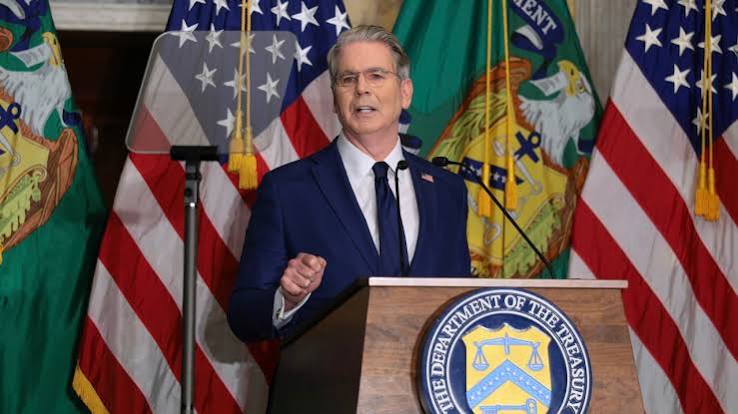
US Treasury Secretary Scott Bessent described the move as an “economic onslaught” against Iran’s financial connections.
According to the US Treasury’s official statement issued on August 24, the campaign is aimed at weakening revenue channels, oil-smuggling networks and sanctions-evasion mechanisms linked to Iran and its Islamic Revolutionary Guard Corps (IRGC).
The move could have implications beyond Iran. Washington has also increased the risk of secondary sanctions for countries and companies that continue doing business with Iran. However, the US has not imposed immediate penalties on all trading partners and has given them time to wind down activities linked to Iran.
Around 60 Entities, Individuals and Vessels Targeted
The US Treasury’s August 24 announcement targeted around 60 entities, individuals and vessels.
According to the Treasury, the targets are linked to Iran’s nuclear and missile technology procurement, cyber operations and oil-revenue networks.
The action covers brokers, companies and shadow-fleet vessels operating across jurisdictions including the UAE, Hong Kong, China, Singapore, Switzerland and Europe.
This means Washington is not focusing only on entities located inside Iran. It is also targeting international networks that Tehran allegedly uses to sell oil, receive payments and evade sanctions.
Five Sectors Face Greater Sanctions Risk
The latest US action expands the sanctions risk associated with Iran-linked activities across five important sectors:
-
Digital assets
-
Technology
-
Gold
-
Aviation
-
Shipping
According to the Treasury, Iran uses these sectors to support its economy and circumvent sanctions.
However, this does not mean that every foreign company operating in these five sectors will automatically face sanctions. The increased risk primarily applies to entities involved in activities that facilitate Iran-linked transactions or sanctions evasion.
What Does the Secondary Sanctions Risk Mean?
One of the most important aspects of the latest announcement is the threat of secondary sanctions.
Washington has not said that every Iran-related business in other countries will immediately face penalties. Instead, the US has indicated that countries and companies will be given a period to wind down identified activities involving Iran.
Entities that continue facilitating prohibited Iran-related transactions could subsequently face US action.
Bessent has also warned that entities helping Iran with money laundering or sanctions evasion could potentially be cut off from the US financial system.
Such measures could make international payments, trade financing and dollar-based transactions involving Iran significantly more difficult.
Washington Targets Iran’s Oil Economy
Oil revenue remains one of Iran’s most important economic lifelines. That is why the new sanctions campaign has placed significant emphasis on oil-smuggling and shadow-fleet networks.
The US Treasury says it has targeted brokers, companies and vessels involved in moving Iranian oil and transferring related revenues to the IRGC-Qods Force and other regime-linked elements.
However, it would be inaccurate to suggest that the new sanctions will immediately stop all Iranian oil exports.
Iran has previously used alternative shipping arrangements and third-country networks to continue oil trade despite sanctions. The ultimate impact of the latest campaign will therefore depend on how effectively Washington can identify and disrupt these networks.
Strait of Hormuz Remains the Biggest Risk Point
Alongside sanctions, the Strait of Hormuz remains the biggest risk for the global energy market.
According to Reuters, before the war began in February, cargoes passing through the Strait represented around 20% of global oil consumption. Maritime traffic has been severely affected by the ongoing conflict.
A Reuters report on August 25 said Iran had identified 45 tankers as violating rules governing passage through the Strait and threatened action against them, including possible cargo confiscation.
The same report said an oil tanker near Oman had also been damaged by an unidentified projectile.
These developments mean that the risk of physical disruption to global energy supplies has not disappeared despite the latest sanctions.
Why Didn’t Crude Oil Surge After the Sanctions Announcement?
The market reaction was relatively muted.
Early on August 25, Brent crude was at $92.44 per barrel, up 27 cents, or around 0.3%. WTI was up 37 cents at $85.38 per barrel.
Both benchmarks had fallen by more than 2% on Monday.
According to Reuters, the market initially viewed Washington’s latest economic strategy as less threatening to physical oil supplies than a direct disruption of shipments through the Strait of Hormuz.
That explains why crude did not immediately surge following the sanctions announcement.
However, this does not mean the oil risk has disappeared. If Iran disrupts shipping or the situation around Hormuz deteriorates further, the geopolitical risk premium in crude could rise sharply again.
Why Is This Important for India?
For India, the impact could come mainly through crude oil and trade/payment channels.
According to Reuters, India’s bilateral trade with Iran fell to around $1.6 billion in FY2025-26, from approximately $17 billion in FY2018-19.
India exports rice, tea, medicines and other products to Iran.
However, growing restrictions on trade and re-export channels through Dubai and the UAE could create additional payment and logistics challenges for Indian exporters.
Reuters reported that US sanctions and UAE restrictions on Iran-related trade could put further pressure on Indian exports to the country.
For India, therefore, the more important issue may not be the size of direct Iran trade but whether sanctions and disruptions around the Strait of Hormuz push global crude prices higher for an extended period.
Impact on the Indian Stock Market
Indian equities remained under pressure on August 25 amid geopolitical tensions and higher oil prices.
According to Reuters, at 9:58 a.m. IST, the Nifty 50 was down 0.32% at 24,142.25, while the Sensex was down 0.24% at 77,184.66.
These were intraday figures and should not be treated as the final closing levels for August 25.
If crude prices remain elevated for an extended period, India could face pressure on its import bill, inflation and corporate input costs. This could also weigh on the rupee and overall market sentiment.
Sectors to Watch
Aviation: Higher jet-fuel costs can put pressure on airline margins.
Paints, chemicals and tyres: Higher petroleum-linked input costs could increase production expenses.
Logistics and shipping: Higher insurance, freight and operational risks could emerge on Middle East routes.
Oil marketing companies: Crude-price volatility could affect margins, although the actual impact will depend on domestic fuel pricing and government policy.
Exporters: Companies with Iran-linked business may face higher compliance and payment-settlement risks.
China Is Also on Washington’s Radar
China is another important factor in the latest sanctions strategy.
China has significant trade and energy links with Iran. Washington has indicated that entities facilitating Iran-related transactions could face sanctions risk.
However, it would be premature to say that the US has already imposed broad secondary sanctions on China under this latest campaign.
Bessent has indicated that trading partners will have an opportunity to reduce their Iran-related activities before further action is considered.
This means the next steps involving Chinese banks, oil buyers and shipping networks will be closely watched by global markets.
Iran’s Economy Was Already Under Pressure
The latest US sanctions come at a time when Iran’s economy is already facing significant stress.
According to AP, the Iranian rial touched a record low of around 2.02 million rials per US dollar in the market on August 24, while the official central-bank rate was around 1.5 million rials per dollar.
The sharp depreciation highlights the pressure already facing Iran’s currency and economy.
However, economic pressure from sanctions does not automatically translate into a political outcome.
Iran still has regional networks, alternative trade channels and strategic leverage around the Strait of Hormuz.
What Happens Next?
Markets will now focus on three developments.
First, will Washington impose further sanctions on financial institutions and payment networks?
Second, will secondary sanctions actually be imposed on China, the UAE or other major trading partners?
Third, will shipping traffic through the Strait of Hormuz return to normal or face further disruption?
The answers to these questions could have a direct impact on crude prices.
If diplomatic progress is made and shipping risks decline, the geopolitical premium in oil could fall. But if physical supply disruptions increase, crude could rise sharply again.
Aurelius Business View
Operation Economic Outcast should not be viewed simply as another sanctions package.
It represents a broader US effort to put pressure on Iran’s oil, financial, shipping, technology and commercial networks simultaneously.
For India, the immediate risk comes less from the size of direct Iran trade and more from crude oil prices and disruptions to global shipping routes.
India’s bilateral trade with Iran stood at only around $1.6 billion in FY2025-26. But if the Strait of Hormuz and Middle East supply chains face prolonged disruption, the impact on India’s import bill and inflation outlook could be significantly larger.
Aurelius Business will be closely watching Brent crude, the rupee, FII flows and Indian bond yields over the coming sessions.
For now, markets appear to be treating Washington’s latest sanctions strategy as a relatively lower-risk development compared with a direct disruption to physical oil supplies.
But that assessment could change quickly if Iran begins actively disrupting shipping routes or if the US extends secondary sanctions to major trading partners.
The real market impact of this story will therefore depend less on the sanctions announcement itself and more on how Washington implements the measures and how Tehran responds.
Disclaimer: This report is based on information published by the US Department of the Treasury, Reuters and AP. The market-impact section contains analysis and should not be considered investment advice. Investing in the stock market is subject to market risks.