
Sensex Nifty fall today by Crude Oil: Sensex Falls Over 1000 Points, Why Did the Stock Market Drop Today?
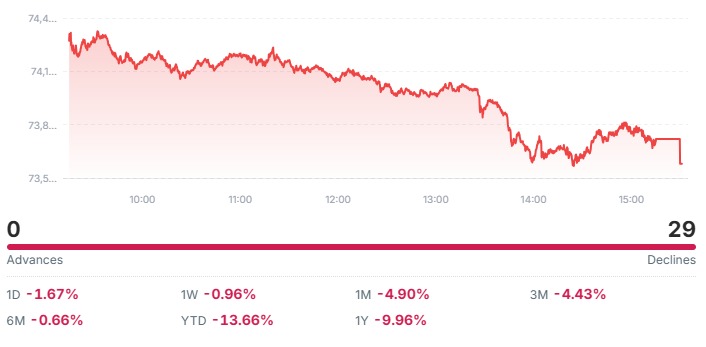
Monday morning was a rough one for Dalal Street. Selling pressure showed up as soon as trading began, and the Sensex tumbled 850 to 1,000 points while the Nifty 50 slipped to around 22,850. Investors who hoped the new week would bring some relief were disappointed again.
The fall did not come out of nowhere. According to Reuters, both major indices had been falling for seven straight sessions and were down about 6% over that stretch. The market was already tired, and crude oil delivered one more blow on Monday.
Oil Prices Spoil Things Again
Crude oil was the biggest reason for the market's nervousness. Brent crude rose about 1.5% in early trade to around $106 a barrel, and WTI held above $93. Investors are watching tensions in West Asia and oil supplies through the Strait of Hormuz.
For India, this news stings in particular. We import a large share of our requirement, so costlier oil means a bigger import bill, a risk of rising inflation and pressure on the rupee. For airlines, paints, chemicals and tyres, higher costs hit margins directly.
The US-Iran Standoff
According to the reports, US President Donald Trump rejected Iran's proposal to reopen the Strait of Hormuz and end the conflict. Meanwhile, Reuters says Iran said on Sunday that its confrontation with the US and Israel can be resolved only through diplomacy.
The distance between the two positions has taken away hopes of a quick resolution. Hormuz is a key route for the world's energy supply, so fear of a prolonged disruption there keeps oil expensive.
Fii selling Investors Keep Pulling Out Money
Foreign institutional investors (FIIs) sold shares worth ₹3,694 crore on Friday alone. According to Reuters, their total selling in September so far has reached about $1.8 billion. When big foreign players keep pulling back, both liquidity and confidence in the market weaken.
Rupee and Bond Market Also Under Watch
Reuters says the rupee and government bonds will stay sensitive this week to oil prices, high global bond yields and the RBI's likely policy direction. A weak currency and high yields make emerging markets less attractive to foreign investors, which is not a good sign for India.
What Technical Analysts Are Saying
On the technical side of the market, Ponmudi R, CEO of Enrich Money, said, "Nifty opened with a mild gap-down and came under intensified selling pressure, slipping below the crucial 23,300 psychological level. The weak opening indicates that sellers remain active at higher levels, keeping the near-term technical structure under pressure. On the upside, the 23,100–23,200 zone is likely to act as the immediate resistance band. A sustained move above 23,200 could provide some relief and support a recovery toward the 23,300–23,400 regio..."
In simple terms, sellers currently have the upper hand. Until the Nifty moves above the resistance zone and holds there, expecting a big recovery would be premature.
Confidence Broken by the Continuous Fall
Seven sessions of decline and last week's weakness have shaken investor confidence. In such conditions, small investors stay away from fresh buying, and forced selling by traders who took leveraged positions makes intraday swings even sharper.
Sectors to Watch
With crude rising, oil marketing companies, aviation, paints, chemicals, tyres and logistics companies will be closely watched. The impact on oil & gas companies may vary, so it would not be right to view the entire sector through one lens. IT stocks will depend on global growth expectations, the rupee's movement and the direction of US markets.
What Next
In the coming days, the market's direction will be set by crude oil prices, US-Iran developments, FII flows, the rupee's movement and global bond yields. According to Moneycontrol, US employment and inflation data this week will also be important for global sentiment.
If tensions rise and crude stays above $100 for long, the risk of higher inflation and import costs in India will grow. On the other hand, diplomatic progress and improved oil supply through Hormuz could bring some relief in prices. For now, volatility is likely to continue, and caution is the wiser course for investors.
Source: Moneycontrol and Reuters
Disclaimer: This article is for information only and is not investment advice. Consult a SEBI-registered adviser before investing. Market figures can change quickly.