JAIPUR: Indian equity markets came under heavy selling pressure on Monday, August 31, as rising tensions between the US and Iran, a sharp rise in crude oil prices above $90 a barrel and weak global cues made investors cautious.
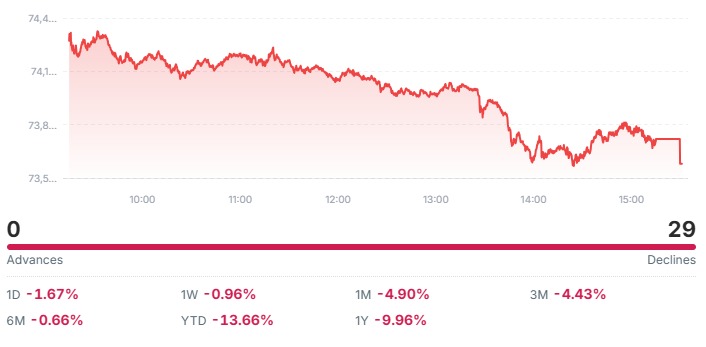
The Sensex fell 344.89 points in early trade, slipping towards the 77,000 mark, while the Nifty 50 declined to around 24,020.
The weakness was visible across several sectors. IT stocks faced particularly strong selling pressure, while a rise in the India VIX pointed to increasing volatility. Small-cap and mid-cap stocks also remained under pressure, although their decline in early trade was relatively limited compared with the benchmark indices.
US-Iran Tensions Trigger Fresh Market Concerns
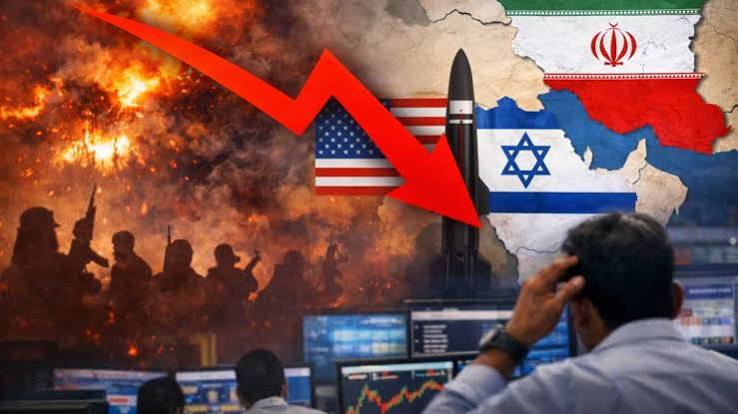
The biggest trigger behind Monday's decline was the escalating tension between the US and Iran. With military tensions rising in the Middle East, investors are increasingly watching developments around the Strait of Hormuz.
The Strait of Hormuz is one of the world's most important oil shipping routes. Any threat to supply through the region can quickly push crude oil prices higher. That concern was reflected in the market as Brent crude moved above the $90-per-barrel level.
For India, this is particularly important because the country relies heavily on imported crude oil to meet its energy requirements. If oil prices remain elevated for an extended period, India's import bill could rise, putting pressure on the rupee and increasing inflation concerns.
Crude Oil Above $90 Raises Inflation Worries
The rise in crude oil prices is a major risk for Indian equities. If Brent remains above $90 for a sustained period, sectors such as aviation, paints, chemicals, tyres and transportation could see higher operating costs.
Higher crude prices can also affect the broader economy. Rising fuel and transportation costs can put pressure on corporate margins, while imported inflation could create additional challenges for the Reserve Bank of India.
This is why investors are now closely tracking every major move in Brent crude, as a prolonged rise in oil prices could have wider implications for the Indian economy and corporate earnings.
IT Stocks Take a Hit
IT stocks were among the major laggards in Monday's session. The Nifty IT index was down around 1.5% in early trade.
Shares of major IT companies, including Infosys, TCS and HCLTech, came under selling pressure. Concerns over global economic growth and the outlook for US interest rates have made investors more cautious about the sector.
Weakness in IT stocks also weighed on the benchmark indices because large technology companies carry significant weight in the Nifty.
India VIX Rises as Market Volatility Increases
The rise in India VIX added to investor nervousness. The volatility index is widely used as a gauge of expected market fluctuations.
A rising VIX generally indicates that traders are preparing for greater swings in the market. While a rise in VIX alone does not mean that a market crash is imminent, its combination with geopolitical tensions and rising crude prices is an important warning sign for investors.
Fed Concerns and US Bond Yields Add Pressure
Concerns over US monetary policy also contributed to the cautious mood. A relatively hawkish stance on inflation has kept investors worried about the possibility of US interest rates remaining higher for longer.
Rising US bond yields can make dollar-denominated assets more attractive and increase the risk of foreign capital flowing out of emerging markets.
For India, this can put additional pressure on both the rupee and equities. At a time when global investors are already becoming more cautious, higher US yields could further influence foreign fund flows.
FII Selling Adds to Market Pressure
Foreign institutional investor selling has also remained a concern for the Indian market.
On August 28, FIIs were net sellers of Indian equities worth around ₹5,039.80 crore. Domestic institutional investors, meanwhile, bought equities worth approximately ₹5,183.93 crore.
DII buying has provided some support to the market, but persistent foreign selling remains a challenge, particularly when global risk sentiment is weak.
MSCI Rejig Could Increase Volatility
The MSCI index rejig is another important event for the market today. Changes in index composition can lead to institutional buying and selling in specific stocks.
This could result in additional volatility, particularly towards the market close. Therefore, today's market movement may not be driven solely by geopolitical developments and crude prices. Large institutional flows could also influence individual stocks and the broader indices.
HDFC Bank Provides Some Relief
Amid the broader weakness, HDFC Bank shares traded higher. The bank has said that CEO Sashidhar Jagdishan will not seek reappointment after his current term ends in October.
Despite the development, HDFC Bank shares were around 2% higher in early trade.
This shows that the market reaction has not been uniform across all stocks. Company-specific developments continue to play an important role even when the broader market is under pressure.
Nifty's 24,000 Level Becomes Crucial
The 24,000 mark has now emerged as an important psychological support level for the Nifty.
If the index manages to hold above this level, the market could see some recovery or short-covering. However, a sustained break below 24,000 could increase selling pressure further.
Going ahead, investors will closely track Brent crude, US-Iran tensions, FII flows, India VIX and US bond yields. These factors are likely to play a key role in determining the direction of Indian equities in the near term.
Aurelius Business View
Monday's decline cannot be attributed to normal profit booking alone. US-Iran tensions, crude oil above $90, selling in IT stocks, rising volatility, concerns over US interest rates and continued FII selling have combined to put pressure on Indian equities.
However, it would still be premature to call this a full-fledged market crash. The bigger question for investors is how long geopolitical tensions remain elevated and whether crude prices continue to stay above the $90 level.
If tensions ease and crude prices retreat, the market could see a sharp recovery along with short-covering. But if oil remains elevated for longer, concerns over inflation, corporate margins and earnings could continue to weigh on investor sentiment.
Disclaimer: This article is based on current market conditions and available information. It should not be considered investment advice or a recommendation to buy or sell any security.