APL Apollo–Tata Steel Deal: Tata Is Buying, So Why Did the Stock Crash 21%?
On Monday, November 23, 2026, Dalal Street saw a confusing sight. Tata Steel is taking control of steel tube maker APL Apollo Tubes, and yet APL Apollo's stock fell about 21% to close at ₹1,668.15. During the day it dropped to ₹1,651, a one-year low. Tata Steel's stock also came under pressure. The question for the average investor is simple: when the buyer is a strong group like Tata, why did the stock crash?
What Is the Deal? The Math in Two Parts
This is not a simple purchase and sale. Both companies are buying something from each other.
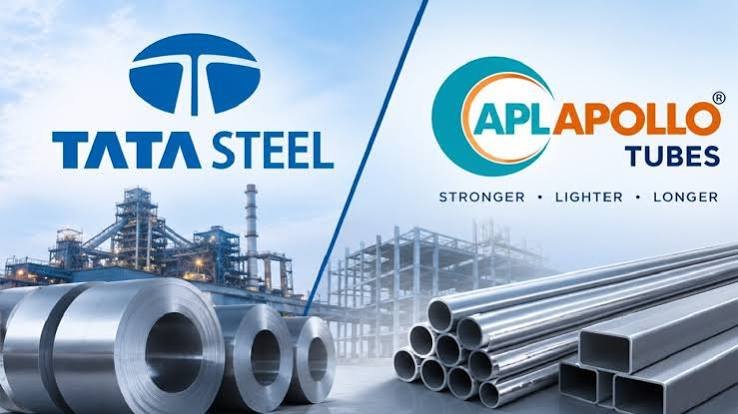
Part one: APL Apollo will buy Tata Steel's tubes business and Tata Steel Colors (the colour-coated business). The total value is about ₹28,000 crore.
Part two: Tata Steel will take a stake in APL Apollo.
- About 26.38% from the promoter (S Gupta Holding) at ₹2,100 per share, roughly ₹15,510 crore.
- Then an open offer for public shareholders: another 26% at ₹2,301.40 per share, worth about ₹16,756 crore in total.
- If the open offer is fully subscribed, Tata Steel's holding will rise to about 52.4%.
PhonePe’s Market Debut: Amid Walmart-Microsoft Selling, Should Retail Investors Take the Bet?
Understand it with an example: Imagine a big shopkeeper becoming the owner of your shop. At the same time, he is selling one of his old branches to your shop for ₹28,000, and your shop has to arrange the payment.
Want to open a demat account? Open one online in minutes with your PAN, Aadhaar and bank account.
👉 [Open with Angel One] | [Open with Groww]
Why Did the Stock Fall? Three Big Reasons
1. The funding question. APL Apollo has to raise ₹28,000 crore for Tata's businesses. At the start, the money will come from debt. Management plans to keep about ₹10,000 crore as debt and convert ₹18,000 crore into equity through different instruments, which means new shares will be issued. This will reduce the holding of existing shareholders, known as dilution. The first tranche is expected within 12 months of the deal closing.
2. Interest burden. If the entire debt stayed at 10% interest, annual interest would exceed ₹2,800 crore. For comparison, APL Apollo's EBITDA in FY26 was ₹1,914 crore. This is why a plan to convert debt into equity has been made, but its terms are not yet clear.
3. Brokerage rating cuts. After the deal, several brokerages cut their ratings and targets:
| Brokerage | New Rating | New Target |
|---|---|---|
| Ambit Capital | Sell | ₹1,200 (earlier ₹1,605) |
| ICICI Securities | Sell (earlier Add) | ₹1,345 (earlier ₹2,200) |
| Axis Capital | Sell (earlier Buy) | ₹1,420 (earlier ₹2,400) |
| Centrum Broking | Sell (earlier Neutral) | ₹1,500 (earlier ₹2,250) |
| Nuvama | Hold (earlier Buy) | ₹1,739 (earlier ₹2,380) |
JM Financial kept its target at ₹2,300, but said the exit of the promoters means the valuation multiple needs to be reconsidered. Motilal Oswal believes the ₹10,000 crore debt will remain a burden on the balance sheet in the near term. Nuvama valued the company at 15x EV/EBITDA, which is 40% below the historical average.
Impact of the Block Deal
According to media reports, a block deal of 2.77 crore shares took place in pre-market trade on Monday at ₹2,100 per share, valued at about ₹5,825 crore. Business Standard said it could not independently verify this. The market took it as a large supply of shares, which pushed the stock to the lower circuit (10%) in early trade.
What Does Tata Steel Gain?
For Tata Steel, this is a big step towards downstream, meaning value-added products.
- The share of downstream value-added products in its portfolio could rise from 35% to 53%.
- After the deal is completed, APL Apollo's capacity will be 7.5 MTPA, and a 25-30% share of the domestic tubes and pipes market is estimated.
- Management's long-term target is ₹10,000 crore EBITDA.
- Tata Steel's net debt/EBITDA could temporarily rise to 2.5x, while the company is comfortable at 2.2-2.3x.
- According to JM Financial, the cash Tata Steel gets from this deal equals about 31% of its September 2026 net debt (₹91,423 crore).
In a Bloomberg survey, 8 out of 12 analysts are bullish on Tata Steel. Even so, according to Business Standard's analysis, the company will have to wait 3 to 3.5 years for an EPS benefit, which means pressure may continue in the near term.
Open Offer: What Should Investors Watch?
The most important point: the open offer price is ₹2,301.40, not ₹2,100. ₹2,100 is only the price of the promoter purchase. About 7.28 crore shares will be bought in the open offer.
This offer is well above Monday's closing price (₹1,668.15). But Tata Steel will buy only 26%, so not all the shares tendered by investors will be accepted. How many are accepted (the Acceptance Ratio) will depend on how many investors take part in the offer. The process will move ahead after regulatory approvals and a shareholder vote. The last tranche of the promoter stake purchase is to be completed by March 31, 2028.
Promoters Are Not Exiting Completely
The promoters will get about ₹15,510 crore for selling their stake. But SG Spectra, a company of the APL group, will set up an exclusive contract manufacturing facility with 5 million tonnes capacity for Tata Steel. This means the promoters will stay connected through contract manufacturing.
Lessons for Investors
- The deal is big and strategic, but the road is not easy for APL Apollo. The real test is funding: how much debt will remain, at what price equity will come, and how the interest burden will be managed.
- Results will show over a few years, and until then dilution and interest pressure may stay on the stock.
- Brokerage views are divided: several brokerages are cautious on APL Apollo, while most analysts are positive on Tata Steel.
- Whether to take part in the open offer should be decided based on your own needs and risk capacity, after consulting a SEBI-registered advisor.
Sources
Business Standard, Business Today, Reuters, PTI, Bloomberg, along with brokerage reports from Ambit Capital, ICICI Securities, Axis Capital, Centrum Broking, Nuvama, JM Financial and Motilal Oswal.
Disclaimer: This article is for information and education purposes only. It is not advice to buy, sell or participate in the open offer of any stock. Please consult your financial advisor before investing.