Iran-US Standoff: Tehran Holds Firm on 7 Conditions as the Hormuz Crisis Shakes Global Oil Markets
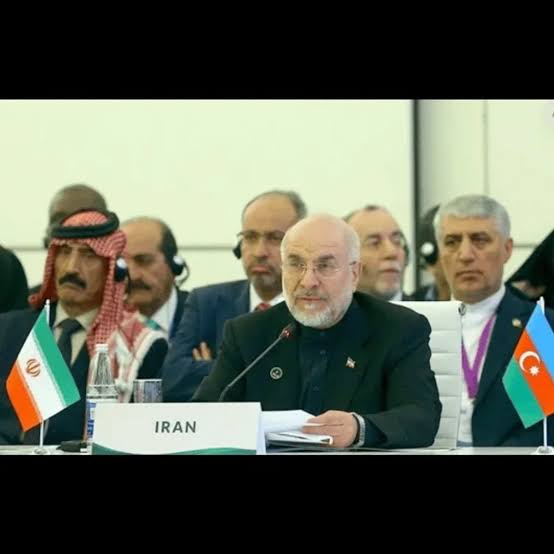
Tehran: After seven months, the war in West Asia appears to be settling into a fragile stalemate rather than ending. Mohsen Rezaei, secretary of Iran's Supreme National Security Council (SNSC), has made clear that the US has "accepted" some of Iran's seven conditions, but Tehran considers Washington's overall response "inadequate." According to the account provided, this stance emerged after a security meeting led by Supreme Leader Mojtaba Khamenei, in which Rezaei briefed him on the security situation and the progress of talks with mediators.
Background to the Conflict
The war began on 28 February 2026, when the US and Israel launched a major joint attack on Iran. In that attack, Supreme Leader Ayatollah Ali Khamenei was killed, and his son Mojtaba Khamenei took over. For security reasons, he does not appear in public. In response, Iran launched missile and drone strikes on US bases in the region and closed the Strait of Hormuz. In June, the two sides signed a memorandum of understanding to end the war, reopen the strait and begin talks on Iran's nuclear programme, but the deal collapsed after attacks on ships in Hormuz. Military action has continued since then.
Iran's Conditions
Iran has sent its conditions to the US via Qatar. Rezaei himself has publicly named three core demands: an end to the war on all fronts, the release of frozen Iranian funds, and an end to the naval blockade. According to Outlook India, Iran has so far made five conditions public, which also include an end to US attacks and to US interference in Iran's internal affairs. The other two have not been disclosed. The lifting of sanctions on the oil sector has also featured prominently among the demands.
Stock Market Today: IT Selling, Crude Spike Weigh on Nifty
Some reports mention demands such as the withdrawal of US forces from the region and war reparations. However, no reliable source officially confirms the full seven-point list, so presenting these as established fact would not be appropriate.
The Hormuz Crisis and the Oil Market
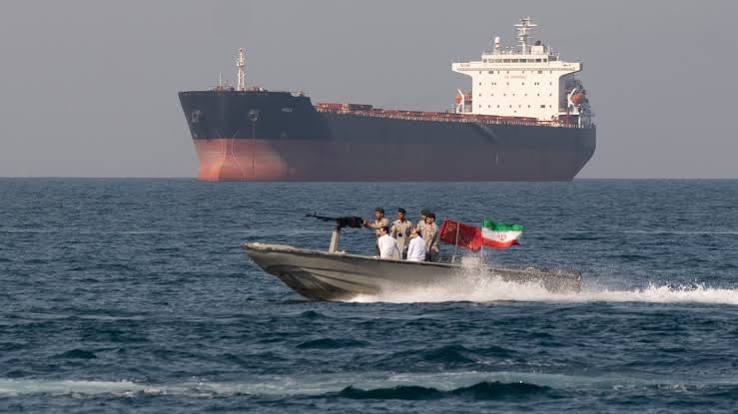
Before the war, roughly a fifth of the world's oil and LNG passed through this narrow waterway. Its closure or disruption has put the global energy market under heavy strain. According to the account provided, Brent crude peaked at $126 per barrel at the height of the crisis and remains around $116 in October. Citing the IEA, it is described as the largest oil supply disruption in history, with about 10.1 million barrels per day lost. Ship freight rates and war-risk insurance premiums have jumped sharply, and fuel-driven inflation is said to have pushed global inflation up by about 0.8 percentage points. For large oil importers like India, the situation is especially worrying, since high prices affect both the current account and domestic inflation.
The US Response
In September, on the sidelines of the UN General Assembly, Iran put forward an amended proposal. It offered to reopen Hormuz and restore normal shipping within seven days if its conditions are met. President Donald Trump initially rejected the plan, but an official response was later sent through Qatar. According to an Iranian official, the US has accepted some conditions, while its position on the rest remains unclear. Tehran accuses Washington of resorting to vague language on key issues such as the blockade and sanctions. Rezaei also said that control of Hormuz is in Iran's hands, and warned that if fighting intensifies again, regional data centres and cables could be targeted.
Diplomatic Efforts
Alongside Qatar and Oman, countries such as Saudi Arabia, Turkey and Pakistan are also working as mediators. Their aim is to stop this regional war from turning into a wider global crisis. According to Al Jazeera, Rezaei said that "in practical terms the war is still going on," while Iran is working on a new strategy to end it quickly. Analysts see this as Iran's dual approach: openness to diplomacy alongside continued war preparations.
What Next?
For now, the situation is one of "neither war nor peace." Iran does not appear ready to back down on its conditions, and the US is avoiding concrete concessions on sanctions and the blockade. Until both sides agree on these fundamental issues, hopes for a full reopening of Hormuz and a return to normal in the oil market will remain weak.
Sources: Based on Gulf News, Al Jazeera, AFP/Ahram, Reuters, Outlook India, Swarajya, Kuwait Times, and the original article you provided.