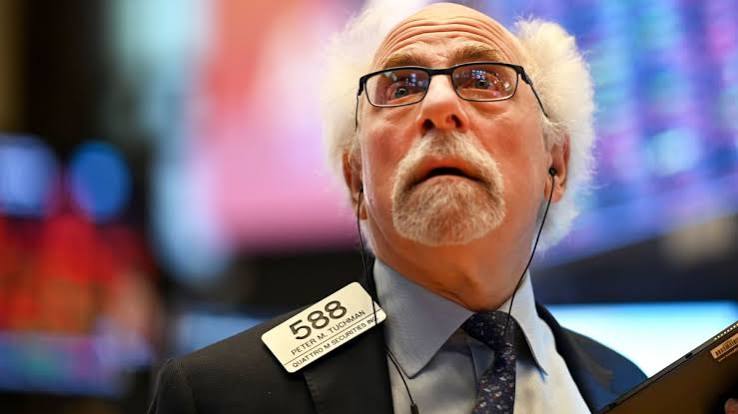
Jaipur – US equity indices suffered their sharpest single-day decline in over three months on Wednesday following a surprisingly hawkish split decision from the Federal Reserve and a sharp escalation in Middle East tensions. <cite index="12-1,13-1">The Dow Jones Industrial Average tumbled 1,153.18 points, or 2.19%, to close at 51,594.14—its worst day of 2026 and worst performance since April 2025.</cite> <cite index="14-1">The S&P 500 declined 1.52% to 7,316.15, while the Nasdaq Composite fell 1.74% to 24,442.94, ending the session more than 10% below its all-time high.</cite>
The Fed's Divided House: Three Dissents Signal Hawkish Shift
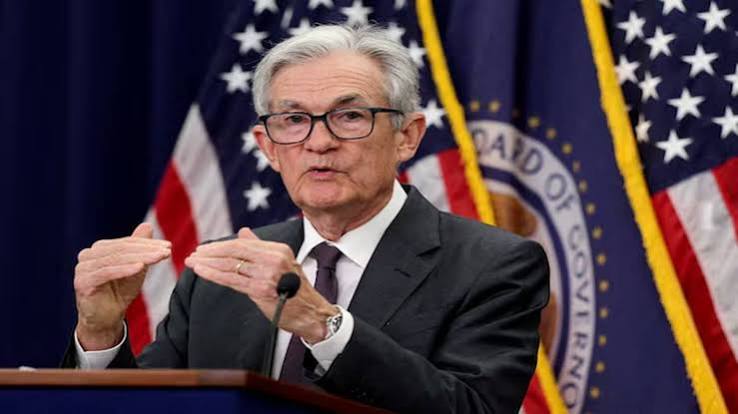
The root of the market turmoil was not the Fed's rate decision itself, but the internal disagreement it exposed. <cite index="13-1">The Federal Open Market Committee voted 9-3 to hold the benchmark interest rate steady at 3.50%-3.75%, with three regional Federal Reserve presidents—Cleveland's Beth Hammack, Minneapolis's Neel Kashkari, and Dallas's Lorie Logan—dissenting in favor of a quarter-point rate hike, marking the highest hawkish dissent count since September 2016.</cite>
This level of dissent came as a shock to market participants who had been positioned for a more dovish tone from Fed Chair Kevin Warsh's second policy meeting:
- Market Expectation: A unanimous or near-unanimous hold, signaling patience on rates
- Market Reality: Explicit hawkish dissent, signaling internal pressure to tighten policy in response to inflation
- Bond Market Translation: If three officials are ready to hike now, more rate increases are likely coming
Bond Yields Explode Higher: The Real Story
<cite index="16-1">The bond market's reaction was immediate and severe: the 10-year Treasury yield jumped 7 basis points to above 4.67%, while the 30-year Treasury yield soared 10 basis points to above 5.2%, hitting its highest level since 2007.</cite> This sharp repricing of interest rate expectations across the yield curve marked a significant shift in market pricing:
| Metric | Before | After | Change |
|---|---|---|---|
| 10-Year Yield | 4.60% | 4.67% | +7 bps |
| 30-Year Yield | 5.10% | 5.20%+ | +10 bps |
| Market Interpretation | Rates on hold through 2026 | Rate hike cycle resuming | Structural shift |
The spike in long-dated yields signals that <cite index="16-1">bond markets are pricing in the possibility that the Federal Reserve could be falling behind on the inflation fight.</cite>
Oil Prices Ignite: Iran-US Escalation Adds to Pressure
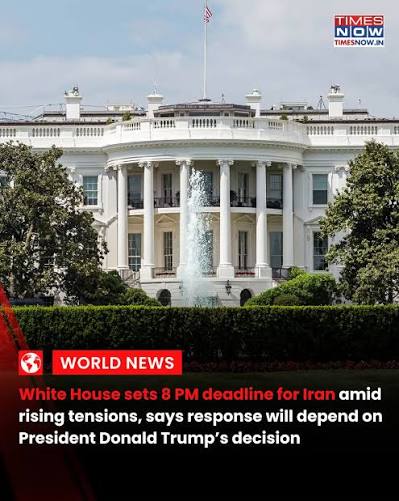
The market selloff was compounded by geopolitical risk flaring in the Middle East. <cite index="16-1">Oil prices surged after President Donald Trump stated the U.S. will hit Iran hard in retaliation for an attempted surprise attack on American forces, with Brent crude futures gaining 6.6% to $89.61 per barrel and U.S. West Texas Intermediate futures advancing 6.4% to $84.31 per barrel.</cite>
The combination of:
- Fed hawkishness (negative for equities, positive for bonds)
- Higher long-term yields (pressures high-valuation tech stocks)
- Soaring oil (inflationary, raises recession fears)
- Geopolitical uncertainty (classic risk-off catalyst)
...created a perfect storm for equity markets, particularly momentum-driven sectors like technology and growth stocks.
Why This Matters for Indian Investors & Markets
The sharp US selloff has direct implications for India:
1. Oil Price Impact
India imports over 80% of its crude oil needs. A move from ~$85/bbl to $89-90/bbl increases:
- Import costs and inflation pressure
- Current account deficit concerns
- RBI's policy easing timeline uncertainty
2. Foreign Portfolio Investor (FPI) Flows
US equity weakness and higher US bond yields (4.67% on 10-year) could trigger FPI profit-taking from Indian equities, shifting capital back to safer US Treasuries. This is a classic risk-off dynamic that puts pressure on emerging market indices.
3. Global Risk Sentiment
<cite index="17-1">Wall Street's takeaway is clear: a rate hike is likely on the horizon as inflation remains a top priority for the Federal Reserve.</cite> If the Fed resumes tightening sooner than expected, it narrows the interest rate differential between US Treasuries and Indian Government Securities, reducing the attractiveness of Indian assets.
4. Tech Sector Spillover
The Nasdaq's 1.74% decline affects Indian IT stock valuations, as global IT spending cycles often soften when US equity sentiment deteriorates.
Aurelius Business View
The US market's worst day since April 2025 represents a crucial inflection point in the global macro narrative. After months of "Fed patience" and "soft landing" optimism, the central bank's internal dissent has forced a recalibration of rate expectations.
What Changed:
- Market Consensus June 2026: Fed will hold through year-end, potentially cut in early 2027
- Market Consensus July 2026: Fed will hike 25-50 bps by Q1 2027, data-dependent
The bond market's violent repricing—particularly the 30-year yield hitting 2007 levels—is the clearest signal that inflation remains sticky and policy normalization (hikes) is coming. This has profound implications for:
- Growth Stocks (hit hardest as higher discount rates compress valuations)
- Emerging Markets (vulnerable to FPI capital flight)
- Commodities (oil reacting to geopolitical risk)
- Currency Markets (stronger dollar headwinds for rupee)
For Indian Traders & Investors:
We expect India's markets to open on Thursday with a risk-off bias, tracking Wall Street's selloff. Key levels to watch:
- Nifty Support: 24,000 (strong floor as discussed in intraday analysis)
- Sensex Support: 77,000
- Risk Indicators: FPI outflows, oil price (above $90), and rupee weakness (should watch USD-INR above 95.70)
Our Stance: The Fed's internal disagreement and oil price surge present a temporary headwind, but India's Q1 FY27 earnings story, growing technology competitiveness, and relative valuation advantage remain intact. Any sharp Nifty decline toward 24,000 should be viewed as a tactical buying opportunity for long-term investors, provided global volatility doesn't escalate further on oil or geopolitical fronts.
The next 48 hours will be critical—earnings from Microsoft and Meta (post-close US time) and RBI's reactions to the Fed shift will set the tone for global markets through August.
Global Markets Summary (as of Wednesday close, July 29, 2026)
| Index | Close | Change | % Change |
|---|---|---|---|
| Dow Jones | 51,594 | -1,153 | -2.19% |
| S&P 500 | 7,316 | -113 | -1.52% |
| Nasdaq | 24,443 | -426 | -1.74% |
| 10-Yr Yield | 4.67% | +7 bps | -- |
| Oil (WTI) | $84.31 | +$5.10 | +6.4% |
| Crude (Brent) | $89.61 | +$5.64 | +6.6% |
Investment Disclaimer: This article is for informational and educational purposes only. Global equity markets and commodity prices are subject to substantial volatility, geopolitical risk, and currency fluctuations. The views expressed represent analysis of publicly available data and should not be construed as investment recommendations. Before making any investment decisions involving international assets, emerging market funds, or currency exposures, readers should consult qualified financial advisors and conduct thorough due diligence. Aurelius Business shall not be liable for any losses arising from reliance on this analysis. Past market performance is not indicative of future results.