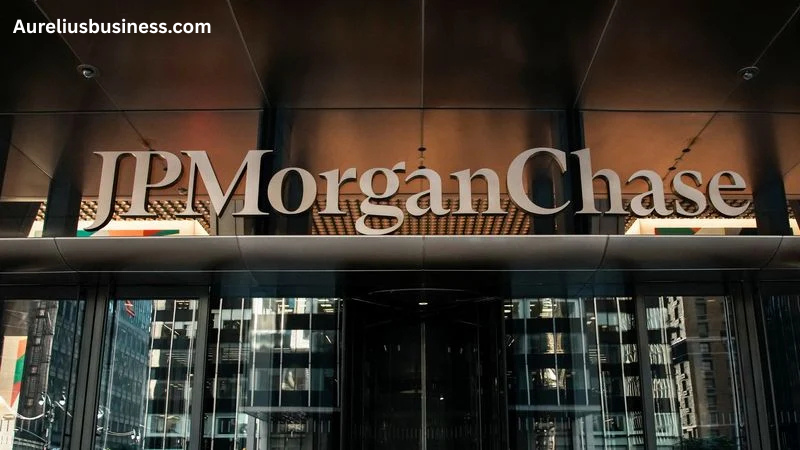
JPMorgan and other major U.S. banks are close to agreeing to provide financing under Japan's $550 billion investment pledge to the United States, according to two people familiar with the discussions between the lenders and the Japanese government, Reuters reported on Tuesday.
Background of the Investment Pledge
The financing arrangement would help Tokyo deliver on commitments made to U.S. President Donald Trump as part of a trade deal struck in July 2025, under which Japan secured a reduced tariff rate of 15% on its exports to the U.S. — down from a threatened 25% levy. So far, Japan has announced two batches of projects worth a combined more than $100 billion under the scheme.
Why Japanese Banks Have Been Reluctant
Japanese megabanks — Mitsubishi UFJ Financial Group, Sumitomo Mitsui Financial Group, and Mizuho Financial Group — have so far co-financed a portion of the pledge alongside the state-backed Japan Bank for International Cooperation (JBIC). However, only $2.2 billion in financing has been committed for the first batch of projects unveiled in February, of which roughly one-third came from JBIC.
The Japanese banks have told the government that securing long-term U.S. dollar funding is costly, given that their funding base is primarily in yen. Raising dollars typically requires issuing dollar bonds, borrowing in wholesale markets, or using swap markets — all of which carry costs that are compounded by the wide gap between U.S. and Japanese interest rates, as well as currency-hedging expenses.
US Banks Stepping In
Against this backdrop, U.S. banks led by JPMorgan are now reportedly close to agreeing to step in and help finance parts of the investment pledge. Reuters was unable to determine how much funding the U.S. banks might provide or for which specific projects, nor whether the U.S. government is directly involved in these discussions. JPMorgan did not respond to a request for comment, while the three Japanese megabanks declined to comment on the potential for additional financing.
Japan's Ministry of Economy, Trade and Industry said no final decisions have been made on U.S. bank participation, noting that such decisions rest with the banks themselves. The ministry added that a third batch of candidate projects has not yet been shortlisted, though bilateral talks are ongoing.
Projects Under the Scheme
The first batch of projects announced in February includes an oil export facility in Texas, an industrial diamond plant in Georgia, and a natural gas-fired power plant in Ohio. A second batch announced in March covers small modular nuclear reactors being built by GE Vernova Hitachi in Tennessee and Alabama, along with natural gas-fired power facilities in Pennsylvania and Texas.
Japan's Prime Minister Sanae Takaichi's government has reportedly been exploring ways to help domestic banks procure U.S. dollars for these projects, including a proposal to tap dollars held in the country's foreign exchange reserves, Kyodo News has reported.
Aurelius Business View
The entry of U.S. banking majors into financing Japan's $550 billion pledge would mark a meaningful shift — easing the dollar-funding constraints that have slowed Japanese lenders' participation and potentially accelerating project rollouts. That said, sources caution that significant risks remain, since large infrastructure projects can take decades to generate returns and for debt to be repaid in full. For global markets and India's own trade and forex outlook, the pace at which this pledge translates into actual capital deployment will be worth tracking, given its ties to broader U.S.-Asia trade dynamics and tariff negotiations.
Disclaimer: This article is for informational purposes only and should not be construed as investment advice. Readers are advised to consult a certified financial advisor before making any investment decisions. Aurelius Business does not take responsibility for any investment decisions made based on this article.