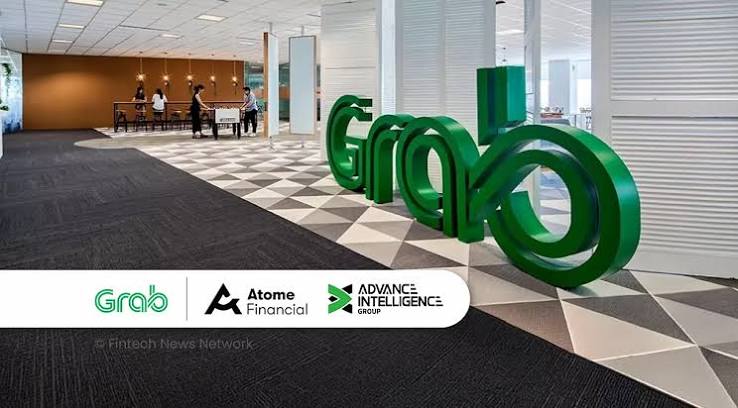
JAIPUR: Grab Holdings, the biggest name in ride-hailing and food delivery across Southeast Asia, is reportedly in talks to pick up a majority stake in Atome Financial — the Singapore-based buy-now-pay-later platform. According to Bloomberg, which first reported the talks citing people familiar with the matter, a deal could value the business at upwards of $2 billion, though the discussions are still ongoing and no final decision has been made.
Atome Financial operates as a unit of Advance Intelligence Group, a Singapore-headquartered fintech company backed by heavyweight investors including SoftBank Vision Fund 2 and Warburg Pincus. That backing is worth noting — it means Grab, if the deal closes, would essentially be buying a well-capitalized, well-connected business rather than an early-stage startup still finding its footing.
Another Piece in Grab's Acquisition Spree
This isn't a one-off move. It comes right after Grab's recent acquisitions of Stash Financial and Foodpanda's Taiwan operations, and together these deals point to something pretty clear: Grab is leaning hard into growth through acquisitions rather than trying to build everything in-house. A few years ago, the company's growth story was mostly about expanding its own ride-hailing and delivery services city by city. Now the playbook has shifted — buy the businesses that already work, rather than spend years building them from scratch. Grab's fintech arm, GXS Bank, has followed a similar approach elsewhere too, having completed the acquisition of SME lender Validus Capital's Singapore business.
Why Atome Makes Sense as a Target
The numbers behind Atome help explain the interest. The company's revenue jumped 80% in 2025, reaching $470 million — and crucially, this marked its second consecutive year of pre-tax profitability. That last part matters a lot in the BNPL world specifically, where plenty of companies have shown fast growth without ever proving they can actually turn a profit. Atome doing both — growing fast and staying in the black — makes it a considerably more attractive acquisition target than a typical high-growth, cash-burning fintech.
Buy-now-pay-later has turned out to be one of the more sticky fintech ideas of the last several years. It works for shoppers because it feels lighter and less intimidating than a credit card, and it works for merchants because it tends to push up how much people spend per purchase. For Grab, buying into a platform like Atome — instead of building a BNPL product on its own — means it doesn't have to spend years working through licensing, building merchant relationships, and earning consumer trust from scratch. It gets a business that's already proven itself and can, in theory, be plugged straight into Grab's existing user base.
A Financial Services Business Still Finding Its Feet
The timing here is also worth understanding through the lens of Grab's own financial services performance. In the first quarter of 2026, Grab's financial services unit posted an adjusted EBITDA loss of $17 million — even as its gross loan portfolio more than doubled year-on-year, climbing to $1.44 billion from $625 million. Grab has said it expects this segment to reach breakeven in the second half of 2026. Against that backdrop, acquiring a BNPL business that's already profitable looks less like a bolt-on and more like a way to help pull the broader financial services division toward the breakeven target it has set for itself.
Part of a Bigger Pattern
Look at the last few deals together — Stash Financial, the Validus Capital acquisition through GXS Bank, Foodpanda's Taiwan business, and now potentially Atome — and a pattern starts to form. Grab appears to be pushing on two fronts at once: strengthening its financial services offerings on one side, while also picking up delivery assets in new markets on the other. It's not a scattershot approach; it looks more like a company trying to round out what it can offer under one roof, using acquisitions as the fastest route to get there.
A deal of this size, if it closes, would also be a bit of a signal for the wider BNPL space in Southeast Asia. The sector globally has faced its share of skepticism in recent years, with plenty of questions raised about whether these companies can actually turn strong growth into sustainable, profitable businesses. Atome commanding a valuation above $2 billion — built on genuine 80% revenue growth and back-to-back profitable years, rather than just buzz — suggests there's still real appetite for BNPL businesses that can show the numbers to back up their story.
What Comes Next
Of course, talks are still talks. Bloomberg's own reporting notes that deliberations are ongoing and no final decisions have been made, so terms could shift and the deal could ultimately not materialize at all, or at a different valuation than currently reported. But the direction Grab is heading in seems fairly clear at this point. Acquisitions have become the company's go-to tool for growth, and financial services — BNPL in particular — looks like an area it's determined to be part of, especially with its own lending business still working toward profitability. If this deal does go through, it would add a proven, already-profitable asset to Grab's expanding footprint beyond its original ride-hailing and delivery roots.
Aurelius Business View
The detail that matters most here isn't the $2 billion price tag — it's that Atome is already profitable. Most of the fintech deals that get scrutinized after the fact are the ones where a fast-growing but loss-making business gets folded into a bigger platform on the promise that scale will eventually fix the economics. Atome flips that script: it's grown 80% while staying in the black for two straight years, which means Grab isn't buying a turnaround project, it's buying a business that already works on its own terms.
That distinction matters even more given where Grab's own financial services arm currently stands — still posting losses, still working toward a breakeven target it has set for itself later this year. Bolting on an already-profitable BNPL business is one of the more direct ways to move that needle, rather than waiting for organic growth in lending to eventually cover the unit's costs. It's less "buying growth" and more "buying a shortcut to the finish line" on a target Grab has already committed to publicly.
The backing behind Atome — SoftBank Vision Fund 2 and Warburg Pincus — is also worth keeping in view. Deals involving well-capitalized targets with institutional investors on the cap table tend to move through diligence and negotiation more predictably than deals involving distressed or capital-starved startups, since there's less pressure on the seller to accept unfavorable terms just to survive. That's a reasonable basis for some optimism that this one moves from "in talks" to "signed" faster than deals typically do in this space — though as always, nothing is final until it's final.
#Grab #Atome #BNPL #M&A #SoutheastAsiaFintech