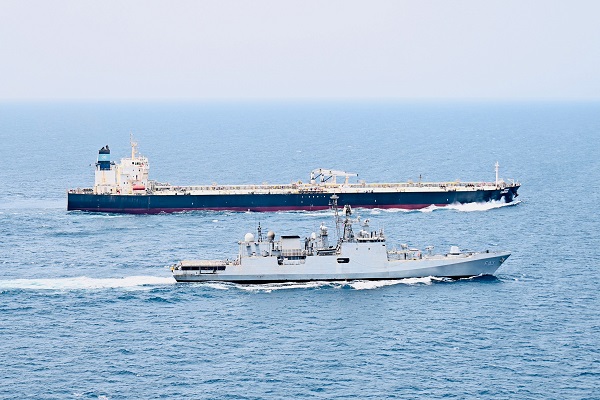
JAIPUR: The United States military struck three Iranian crude oil tankers on Saturday, September 5, 2026, after Iran's Islamic Revolutionary Guard Corps (IRGC) fired ballistic missiles at two US Navy warships. The IRGC's missiles failed to hit their targets, as both a US aircraft carrier and a guided-missile destroyer were able to evade the attack, and no American personnel were injured.
What CENTCOM Says Happened
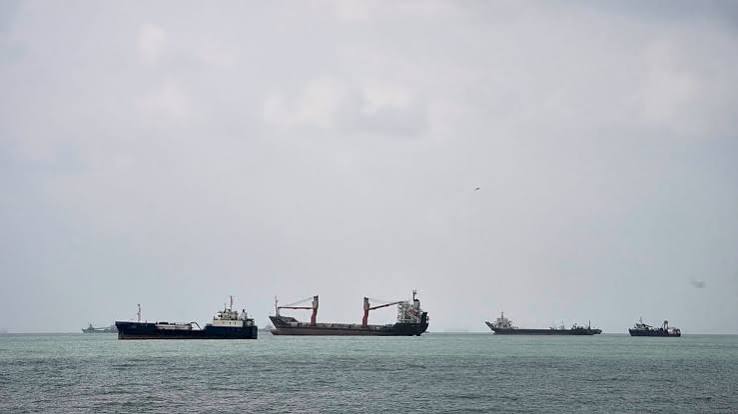
U.S. Central Command confirmed the retaliatory strikes in a statement released Saturday. Two of the three tankers, the M/T Downy near Kharg Island and the M/T Stark 1 near Jask, were permanently disabled, while a third vessel, the unladen M/T Kylo, was completely destroyed in the Gulf of Oman. According to CENTCOM, crews aboard the targeted ships were directed to abandon their vessels before the strikes hit, and no casualties were reported on either side.
CENTCOM commander Admiral Brad Cooper framed the operation as a direct message to Iran's military establishment. He said that if the IRGC fires on two American ships, the US will respond by imposing a heavier economic cost — destroying three Iranian vessels instead. He added that American forces would not hesitate to defend themselves and would strike Iran's oil tanker fleet again if necessary.
U.S. Defense Secretary Pete Hegseth reinforced the same message on social media, framing the policy in blunt terms: stop shooting at the US Navy, or lose more tankers. He also pointed out that Iran currently has no navy or air force of its own to defend its oil tanker fleet, calling it defenseless.
The New "Tanker for Tanker" Policy
Saturday's strikes were not an isolated incident — they're the latest move under a new U.S. military doctrine that emerged just days earlier. A U.S. official said the tanker-for-tanker approach was approved by President Trump specifically to deter further Iranian attacks on vessels transiting the Strait of Hormuz.
This marked a shift in strategy. Until now, U.S. strikes on Iranian tankers in the strait had been aimed at preventing violations of the naval blockade — not at directly retaliating for Iranian attacks on shipping. The doctrine flipped that logic: every Iranian strike on a commercial vessel would now cost Tehran one of its own tankers.
The policy's opening act came earlier in the week. U.S. officials said that around 100 targets were hit during Tuesday's strikes, with drone-launched missiles striking the engine rooms of Iranian government tankers anchored off the country's coast. Beyond the tankers themselves, the broader operation also went after the military infrastructure Iran uses to threaten shipping. Targets included IRGC air defense sites, radar systems, mine-laying capabilities, communications infrastructure, anti-ship cruise missile launchers, and drone launch platforms.
Officials have described the recurring campaign against Iran's rebuilt military capacity in a memorable phrase. One U.S. official described the strategy as an effort to "mow the lawn," reducing the risk of renewed Iranian attacks on tankers, Navy ships, and aircraft in the region. That same round of strikes was estimated to have bought roughly a month of reduced threat levels for commercial shipping passing through the strait.
Iran's Response
Tehran's initial reaction came through state media rather than official government channels. Iran's semi-official Tasnim news agency reported that a tanker near Kharg Island was hit by four projectiles fired by U.S. forces, though it said there were no casualties and that the crew was being evacuated. As of Saturday, there had been no formal statement from Iran's top leadership, though Iranian officials quoted by state agency IRNA said they would respond strongly to any attack.
The Bigger Picture
This exchange didn't happen in isolation — it's part of a war between the US/Israel and Iran that has now run for more than half a year. The strikes extend a tit-for-tat conflict that has just passed its six-month mark. And the toll on regional shipping has been significant and ongoing. Ship traffic through the Strait of Hormuz remains well below pre-war levels, with roughly 102 transits recorded last week compared to over 130 per day before the conflict began, largely due to the risk posed by Iran's vetting regime for vessels attempting passage.
President Trump has been vocal about the direction the conflict is taking. Following the earlier round of strikes this week, he wrote that he preferred the current U.S. position of near-total control over the strait while describing Iran's economy as collapsing entirely. Trump has also warned of far harsher consequences if Iran continues to retaliate, while saying he currently has no interest in direct talks with Iranian leadership.
Why It Matters
What makes Saturday's strikes notable isn't just the scale — three tankers hit in a single operation — but the doctrine behind them. By committing publicly to a tanker-for-tanker exchange rate, Washington has set up a mechanical, almost automatic cycle of retaliation: every Iranian strike on shipping now has a pre-announced, proportionate (or larger) American response attached to it. That's a deliberate attempt at deterrence, but it also removes ambiguity from what happens next — for both sides. With no peace framework in place since the war broke out earlier this year, and both militaries now locked into a predictable pattern of exchange, the risk is that this predictability entrenches the conflict rather than ending it.
This article is based on reporting from CENTCOM statements, Reuters, CNN, Axios, Forbes, and other outlets as of September 5, 2026. This is a live, developing situation in an active conflict zone — details may change as more information emerges.