JAIOUR: Kremlin spokesperson Dmitry Peskov said on Tuesday that India's energy imports from Russia continue to hit new records every month, with no sign of a slowdown. Speaking to Indian journalists in a virtual briefing, Peskov said exact figures could not be shared, but reiterated that imports were setting fresh records month after month. The statement comes just days before the BRICS Summit begins in New Delhi.
Background: How India-Russia Energy Trade Grew
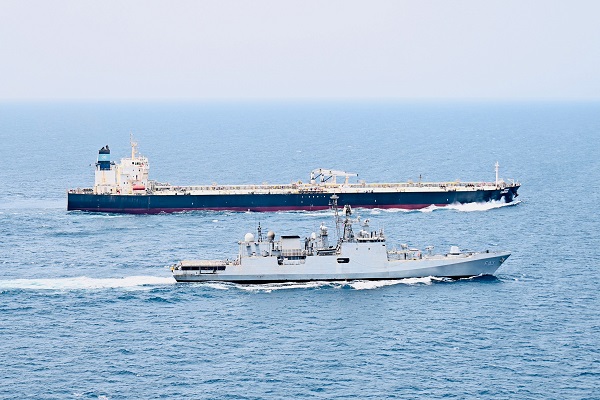
After the Ukraine war began in 2022, Western nations imposed strict sanctions on Russia, largely shutting European markets to Russian crude oil. Russia responded by redirecting its oil at steep discounts toward Asian markets, particularly India and China. Russia's share in India's overall crude oil imports was once minimal, but over the past few years it has risen sharply to become one of the largest sources. The discounted pricing made Russian oil an economically attractive option for Indian refiners, driving a steady rise in import volumes.
The Shadow of US Pressure and Tariffs
India's growing energy imports from Russia have been a major source of trade tension with the United States. Washington has periodically issued warnings of additional tariffs and pressure on Indian imports, seeking to push New Delhi to reduce its dependence on Russian energy. Despite this, the Indian government's position has remained that sourcing affordable oil is part of its sovereign economic policy, driven by energy security and the interests of domestic consumers. Against this backdrop, Peskov's statement is seen as significant, signaling that the trade relationship continues to grow stronger despite Western pressure.
Bilateral Trade and Rupee Payments
Peskov said the issue of accumulated rupee payments in India-Russia bilateral trade is being gradually resolved. Due to the scale of oil imports, a large volume of rupee payments from Indian refiners had piled up, which Russia had been unable to fully utilize, since there are limited avenues for absorbing such large sums into the Russian economy. Both sides have reportedly been discussing new investment and import mechanisms to address this issue.
Peskov also noted that the two countries are in discussions for closer cooperation on rare earth exploration. Rare earth elements are considered critical for modern technology, electric vehicles, and defense equipment manufacturing, and China currently dominates the global supply chain for these materials. Cooperation between India and Russia in this area is being viewed as an attempt to diversify supply sources.
Also on the bilateral agenda is the potential sale of Russia's Sukhoi Su-57 stealth fighter jet to India. This isn't the first time the proposal has come up — Russia has offered the advanced aircraft to India on multiple occasions before, though no final decision has been made public yet.
No De-Dollarization Policy: Peskov
On the use of national currencies among BRICS nations, Peskov clarified that the shift has been driven by Western pressure rather than any deliberate move away from the dollar. According to him, the use of national currencies isn't a de-dollarization policy but a step that better aligns with national interests. He alleged that certain countries are using national currencies as tools of political pressure, and that if Russia is denied the use of the dollar and euro, it will fall back on its own currency.
Peskov reiterated that Russia is not seeking de-dollarization and remains open to every acceptable method of payment. This statement carries weight because Western nations have often expressed concern that the BRICS bloc is working toward a shared currency or alternative payment system to challenge the dollar's global dominance. Peskov's remarks suggest Russia currently wants to frame this as a practical necessity rather than an ideological campaign.
Putin's New Delhi Visit
Russian President Vladimir Putin will attend the BRICS Summit in New Delhi on September 12-13, where he will focus on security, economy, finance, and culture. Putin will also hold bilateral talks with Prime Minister Narendra Modi on Friday, with trade and economic cooperation forming a major part of the agenda. This meeting comes at a time of rapid shifts in global geopolitics, with India seeking to maintain strategic autonomy in its foreign policy — strengthening ties with Western nations while preserving its longstanding and trusted partnership with Russia.
Diplomatic circles view this visit as particularly significant since it falls during India's BRICS presidency, giving New Delhi an opportunity to play a balancing and influential role on the global stage.
India's BRICS Presidency
India holds the BRICS presidency in 2026, under the theme "Building for Resilience, Innovation, Cooperation and Sustainability." With expanded membership, BRICS now includes Brazil, China, Egypt, Ethiopia, India, Indonesia, Iran, Russia, Saudi Arabia, South Africa, and the United Arab Emirates, along with 10 partner countries. For India, this expansion is seen as a major opportunity to boost exports, attract investment, diversify supply chains, and strengthen technology partnerships.
The partner countries include Belarus, Bolivia, Kazakhstan, Cuba, Malaysia, Nigeria, Thailand, Uganda, Uzbekistan, and Vietnam.
The Road Ahead
Analysts believe the India-Russia energy partnership is likely to continue in the near term, barring any major shifts in global crude prices or geopolitical conditions. The Modi-Putin meeting during the BRICS Summit is expected to help chart the way forward on issues such as rupee payments, defense deals, and rare earth cooperation. That said, Peskov's statement notably lacks concrete figures, making it difficult to independently verify the claims. The coming days — through the summit and bilateral talks — should make clear how quickly these announcements translate into concrete outcomes.
This article is for informational purposes only and should not be considered financial or investment advice.