The next big chapter in the US-China relationship is taking shape in Washington.
JAIPUR: US President Donald Trump has said Chinese President Xi Jinping will visit the United States on September 24, 2026, setting the stage for another high-level meeting between the leaders of the world's two largest economies. Trump has also indicated that Artificial Intelligence (AI) will be among the issues discussed.
The timing of the meeting is important. Washington and Beijing are still trying to manage disagreements over tariffs, technology restrictions, semiconductor supplies and strategic security. Any sign of progress between the two sides could therefore be closely watched not just by governments, but also by global investors and companies that depend on international supply chains.
From Beijing to Washington
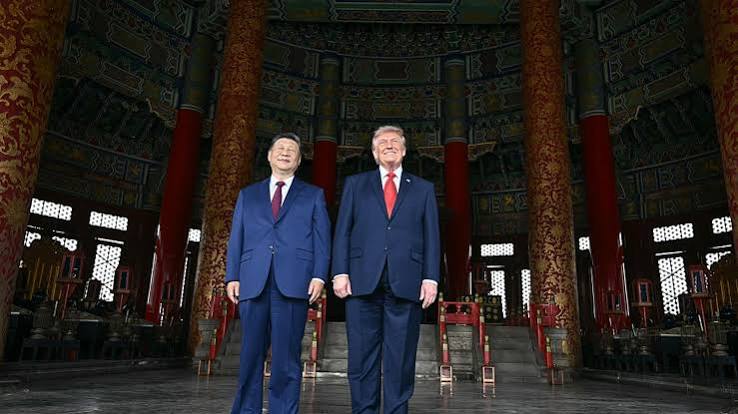
Trump and Xi last held a major face-to-face meeting in Beijing on May 14, 2026. The meeting was part of Trump's China visit and came against the backdrop of continuing trade and economic tensions between the two countries.
The two governments have since continued their high-level dialogue, even as disagreements over technology and strategic issues remain.
Trump's invitation to Xi was made during that Beijing visit. On July 23, Trump said Xi would travel to the US on September 24, giving markets and businesses a date to watch.
The upcoming Washington meeting is therefore not an isolated diplomatic event. It follows months of negotiations aimed at keeping the relationship from deteriorating further.
Why AI Has Become So Important
AI is likely to be one of the most closely watched parts of the September discussions.
The reason is simple: the competition between the US and China is no longer limited to traditional trade. It increasingly involves advanced chips, AI models, computing capacity and access to critical technology.
Trump has said AI was discussed during his Beijing meeting with Xi and that the subject will come up again in Washington. US Secretary of State Marco Rubio and Chinese Foreign Minister Wang Yi also held talks in July as both sides prepared for the next stage of engagement.
For Washington, controlling access to advanced technology is increasingly linked to national security. For Beijing, developing domestic capabilities in semiconductors and AI is a major part of its strategy to reduce dependence on foreign technology.
That makes AI an area where the two countries could potentially find limited areas of cooperation, but it is also one of the biggest sources of competition.
Trade and Tariffs Still a Major Test
Despite the growing focus on AI, trade and tariffs are unlikely to disappear from the agenda.
The US and China remain deeply connected through global trade. Any change in tariffs can have a knock-on effect on manufacturers, exporters, shipping companies, commodity markets and businesses that rely on cross-border supply chains.
The May discussions also covered broader economic cooperation, including agricultural trade.
For investors, the important question will be whether the September meeting produces something tangible. A reduction in tariffs, a new trade framework or greater clarity on technology restrictions could be viewed positively by markets.
On the other hand, if negotiations fail to produce meaningful progress, businesses may continue to operate with uncertainty over future tariffs and technology rules.
What Could the Summit Mean for Global Markets?
Markets are unlikely to react simply to the fact that Trump and Xi are meeting. What matters more will be what comes out of the meeting.
A constructive outcome could improve investor sentiment, particularly across Asian markets. Technology and semiconductor stocks could benefit if there is greater clarity around trade and technology restrictions. Companies with significant exposure to China could also see some relief.
The opposite is also possible.
If the two leaders fail to narrow their differences—or announce new tariffs and technology restrictions—investors could become more cautious. Companies may once again have to reconsider sourcing, manufacturing and logistics strategies.
In other words, the summit could become a market-positive event, but only if diplomacy produces something concrete.
Why India Will Be Watching Closely
For India, the outcome of the Trump-Xi meeting matters because the US-China relationship has been an important factor behind the global China+1 strategy.
Over the past few years, international companies have looked for manufacturing and sourcing alternatives outside China. India has been one of the countries trying to capture that opportunity, particularly in electronics, manufacturing, chemicals and other industrial segments.
A prolonged period of US-China tension could encourage companies to continue diversifying their supply chains, potentially benefiting Indian manufacturers.
But there is another side to the equation.
If Washington and Beijing manage to significantly improve their economic relationship, some companies may become more comfortable relying on Chinese supply chains again. That could increase competitive pressure on Indian manufacturers, although it would not necessarily reverse India's longer-term manufacturing opportunity.
For Indian investors, electronics manufacturing, specialty chemicals, pharmaceuticals, auto components and export-oriented businesses are among the areas worth watching.
What Investors Should Track Before September 24
The weeks leading up to the meeting could be just as important as the summit itself.
Investors should keep an eye on:
-
US-China tariff announcements
-
Restrictions on advanced AI chips
-
Semiconductor trade policies
-
AI-related regulations
-
Critical minerals and supply-chain agreements
-
Technology trade between the two countries
-
Developments involving Taiwan
-
Official statements from Washington and Beijing
Any major agreement on trade or technology could improve global risk appetite. Fresh restrictions, however, could have the opposite effect.
Aurelius Business View
The Trump-Xi meeting should not be viewed simply as another diplomatic engagement.
At stake is a much bigger question: how will the world's two largest economies manage their competition in AI, semiconductors, trade and technology without allowing it to disrupt the global economy?
The May meeting showed that Washington and Beijing are still willing to keep communication channels open. But continued dialogue does not mean that the underlying disagreements have disappeared.
The September 24 summit will therefore be judged by what Trump and Xi are able to deliver—not simply by the fact that they sit across the table from each other.
For global investors, the biggest signal will be whether the two sides move towards greater predictability and cooperation, or whether tariffs and technology restrictions remain a source of uncertainty.
For India, the picture is more nuanced. Continued US-China competition could support the China+1 opportunity, while a major improvement in US-China relations could increase competition for some manufacturing and supply-chain businesses.
Disclaimer: This article is for informational and educational purposes only. The market implications discussed above are analytical in nature and should not be treated as investment advice or a recommendation to buy or sell any security.